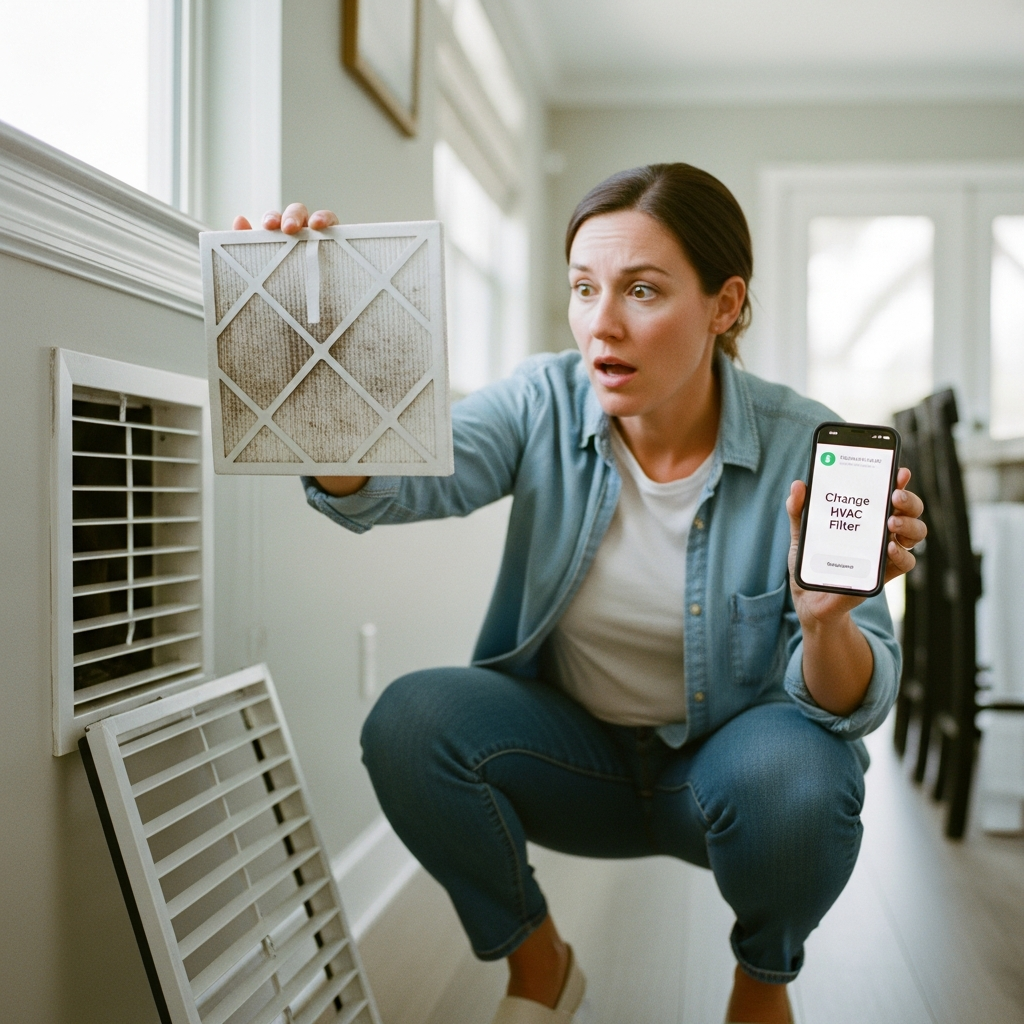
Walk into any hardware store in Niceville, Crestview, Fort Walton Beach, or Valparaiso, and you’ll face an overwhelming wall of HVAC air filters. Fiberglass filters for $3. Pleated filters for $15. “Allergy defense” filters for $30. MERV ratings from 1 to 16. What’s the difference, and does it really matter which one you choose?
The answer is yes—your choice in HVAC air filters significantly impacts your indoor air quality, energy bills, system efficiency, and even your HVAC equipment’s lifespan. But you don’t need the most expensive filter on the shelf. You need the right filter for your specific system and Florida’s unique climate challenges.
This comprehensive guide to HVAC air filters will help you understand MERV ratings, choose the optimal filter for your home, and maintain your system properly to maximize comfort, efficiency, and air quality.
What Does MERV Rating Mean?
MERV stands for Minimum Efficiency Reporting Value—a standardized rating system developed by the American Society of Heating, Refrigerating, and Air-Conditioning Engineers (ASHRAE) to measure how effectively an air filter captures airborne particles. MERV ratings range from 1 to 20, with higher numbers indicating the filter captures smaller particles. A MERV 8 filter captures particles as small as 3 microns, while a MERV 13 filter captures particles as small as 0.3 microns, including bacteria and some virus particles.
Understanding the MERV Rating Scale
MERV 1-4 (Basic Filtration):
- Captures: Pollen, dust mites, carpet fibers, textile fibers (particles larger than 10 microns)
- Doesn’t capture: Mold spores, pet dander, fine dust, smog particles
- Common types: Fiberglass panel filters, those cheap blue or pink filters
- Best for: Pre-filters, protection of equipment only (not air quality)
- Cost: $1-5 per filter
- Florida recommendation: ❌ Not recommended—insufficient for our humid climate and air quality needs
MERV 5-8 (Better Filtration):
- Captures: Everything MERV 1-4 captures plus mold spores, pet dander, dust mite debris, hair spray particles (3-10 microns)
- Doesn’t capture: Bacteria, most tobacco smoke, virus particles
- Common types: Pleated filters, standard residential filters
- Best for: Basic residential use, minimal allergy concerns
- Cost: $8-15 per filter
- Florida recommendation: ✅ Minimum acceptable—MERV 8 is the baseline for Florida homes
MERV 9-12 (Good Filtration):
- Captures: Everything MERV 5-8 captures plus Legionella bacteria, lead dust, humidifier dust, auto emissions, milled flour (1-3 microns)
- Common types: High-quality pleated filters, “superior residential” filters
- Best for: Residential comfort, moderate to severe allergies, improved air quality
- Cost: $15-25 per filter
- Florida recommendation: ⭐ IDEAL—MERV 11 is optimal for most Florida homes
MERV 13-16 (Excellent Filtration):
- Captures: Everything MERV 9-12 captures plus bacteria, tobacco smoke, sneeze particles, virus particles (0.3-1 microns)
- Common types: Hospital-grade filters, “superior allergen” filters
- Best for: Severe allergies, immunocompromised residents, hospitals
- Cost: $25-45 per filter
- Florida recommendation: ⚠️ Use with caution—may restrict airflow in standard residential systems
- Note: Requires professional consultation to ensure your system can handle the airflow restriction
MERV 17-20 (Maximum Filtration):
- Captures: Virus particles, carbon dust, sea salt, combustion smoke (less than 0.3 microns)
- Common types: HEPA filters, clean room filters
- Best for: Hospitals, pharmaceutical manufacturing, clean rooms
- Florida recommendation: ❌ Not for residential HVAC—requires specialized equipment
What MERV Rating Should I Use in Florida?
For most Northwest Florida homes, MERV 8-11 filters provide the optimal balance of air quality improvement, system protection, and airflow efficiency. Here’s how to choose:
Use MERV 8 if:
- Your system is older (10+ years) and may have airflow limitations
- You have no significant allergy or respiratory concerns
- You’re on a tight budget
- Your home has minimal dust and pet dander
Use MERV 11 if: (RECOMMENDED FOR MOST HOMES)
- You want excellent air quality without airflow concerns
- Anyone in your home has allergies or asthma
- You have pets
- Florida’s pollen and mold spores are a concern
- You want to protect your HVAC equipment from dust buildup
Use MERV 13 if:
- Someone in your home has severe allergies or is immunocompromised
- You’ve confirmed with an HVAC air filters professional that your system can handle the restriction
- You’re willing to change filters more frequently (every 30-45 days)
- Your system has adequate blower capacity
Never use MERV ratings higher than your system is designed for. Too restrictive a filter can:
- Restrict airflow, reducing efficiency by 10-20%
- Cause your blower motor to work harder and fail prematurely
- Lead to frozen evaporator coils
- Increase energy costs
- Actually reduce air quality by allowing unfiltered air to bypass the filter through gaps
How HVAC Air Filters Affect Your HVAC System Performance
Your air filter does more than clean your air—it directly impacts system efficiency and longevity:
Proper Filtration Benefits:
- Prevents dust buildup on evaporator coils (maintains efficiency)
- Protects blower motor from debris damage
- Keeps ductwork clean
- Maintains proper airflow for optimal performance
- Extends equipment lifespan by 2-3 years
Wrong Filter or Neglected Maintenance Consequences:
- Clogged filters restrict airflow by up to 50%
- Reduced airflow causes 5-15% efficiency loss
- Blower motor strain increases energy consumption
- Frozen evaporator coils from insufficient airflow
- Heat exchanger overheating in heating mode
- System cycling on and off frequently
- Compressor damage from inadequate cooling
How Often Should You Change HVAC Air Filters in Florida?
Standard advice says “change filters every 3 months,” but Florida’s climate demands more frequent replacement:
Monthly replacement (every 30 days):
- Severe allergy season (spring and fall)
- Homes with multiple pets
- Homes with smokers
- High occupancy (large families)
- Recent construction or renovation (high dust)
Every 60 days:
- MERV 8-11 filters in typical Florida homes
- Moderate pet dander (1-2 pets)
- Average pollen season
- Standard occupancy (2-4 people)
Every 90 days:
- ONLY in ideal conditions: vacation homes, minimal occupancy, low pollen season
- Not recommended for year-round Florida residents
Why Florida requires more frequent changes:
- 74.5% average humidity causes filters to accumulate moisture
- Moist filters clog faster and grow mold
- Higher pollen counts than most of the U.S.
- Extended AC season (8-10 months) means constant filter use
- Salt air in coastal areas increases airborne particles
Fiberglass vs. Pleated HVAC Air Filters: What’s the Difference?
Fiberglass Filters (MERV 1-4):
- Construction: Layered fiberglass fibers in a cardboard frame
- Pros: Extremely cheap ($1-3), unrestricted airflow
- Cons: Captures only the largest particles, does nothing for air quality, disposable
- Florida verdict: Only acceptable for protecting equipment in storage units or workshops—not homes
Pleated Filters (MERV 5-13):
- Construction: Folded synthetic material (polyester or cotton) creating more surface area
- Pros: Much better particle capture, protects equipment AND improves air quality, longer lifespan
- Cons: More expensive, slightly restricts airflow (when properly sized, this isn’t a problem)
- Florida verdict: Always choose pleated filters—the extra $10-20 investment is worth it
Electrostatic Filters:
- Construction: Washable synthetic fibers that generate static electricity to attract particles
- Pros: Reusable for 5-8 years, no recurring purchase cost after initial investment
- Cons: Must be washed monthly (time-consuming), less effective than disposable pleated filters, can lose effectiveness over time
- Florida verdict: Viable option if you’re committed to monthly washing, but disposable MERV 11 filters usually provide better air quality with less effort
Do More Expensive HVAC Air Filters Really Work Better?
Yes and no—it depends on what “better” means to you:
More expensive filters (MERV 11-13) capture more particles: They objectively remove more allergens, bacteria, and fine dust from your air. If someone in your home has allergies or asthma, the improvement in air quality is measurable and meaningful.
But diminishing returns exist: Going from MERV 4 to MERV 8 provides dramatic improvement. Going from MERV 8 to MERV 11 provides moderate improvement. Going from MERV 11 to MERV 13 provides minimal additional benefit for most homes—while potentially causing airflow problems.
Cost analysis:
- MERV 4 fiberglass: $3/month = $36/year
- MERV 8 pleated: $12/month = $144/year
- MERV 11 pleated: $18/month = $216/year
- MERV 13 hospital-grade: $35/month = $420/year
For most Florida families, the $72 annual difference between MERV 8 and MERV 11 is worthwhile. The $200+ annual jump to MERV 13 only makes sense for specific health needs.
How to Install HVAC Air Filters Correctly
Even the best filter doesn’t work properly if installed incorrectly:
Step 1: Locate Your Filter Most filters are in one of these locations:
- Return air vent (usually on a wall or ceiling)
- Air handler cabinet (often in a closet, attic, or garage)
- Return air grille (large vent cover, often in hallway or central area)
Step 2: Turn Off Your System (Optional but Recommended) While not strictly necessary, turning off your HVAC at the thermostat prevents dust from being pulled through during replacement.
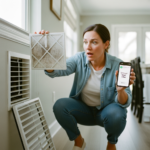
Step 3: Note the Airflow Direction Every filter has arrows printed on the frame indicating airflow direction. The arrows must point toward the air handler/furnace (the direction air flows INTO your HVAC system).
Step 4: Check Filter Size The size is printed on the filter frame (e.g., 16x25x1, 20x20x1). The actual filter may be slightly smaller than the stated size—this is normal. Buy the size printed on your old filter.
Step 5: Insert the New Filter
- Slide the filter into the slot with arrows pointing toward equipment
- Ensure it sits flush in the frame with no gaps around edges
- Close any access doors or panels
Step 6: Mark Your Calendar Set a reminder for 30-60 days to check and replace again.
Signs You Need to Change Your Filter Immediately
Don’t wait for your scheduled replacement if you notice:
- Visible dust coating the filter surface (should be checked monthly)
- Reduced airflow from vents throughout your home
- System running longer to reach set temperature
- Higher than normal energy bills without explanation
- Increased dust settling on furniture
- Family members experiencing worsening allergies indoors
- Musty smell when system runs (sign of mold growth on filter)
- System short cycling (turning on and off frequently)
Specialty HVAC Air Filters: Are They Worth It?
Activated Carbon Filters:
- Remove odors, VOCs (volatile organic compounds), and chemical fumes
- Useful for homes near highways, industrial areas, or with strong cooking odors
- Cost: $25-40 per filter
- Florida verdict: Worthwhile if odor control is a priority; otherwise, standard MERV 11 is sufficient
Antimicrobial Filters:
- Treated with chemicals to inhibit mold and bacteria growth on the filter itself
- Useful in extremely humid climates (like Florida)
- Cost: $20-30 per filter
- Florida verdict: Helpful but not essential if you change filters regularly
“Allergen Defense” Marketing Filters:
- Often just MERV 11-13 filters with marketing language
- Check the actual MERV rating—you may be paying extra for packaging
- Cost: Often 20-40% more than comparable MERV-rated filters
- Florida verdict: Read the fine print; you may be overpaying for equivalent filtration
What If My Filter Gets Wet?
In Florida’s humid climate, filters can absorb moisture, especially in air handlers located in garages or attics:
If your filter is damp:
- Replace it immediately—don’t try to dry it
- Wet filters become breeding grounds for mold in hours
- Investigate why moisture is reaching the filter (possible condensate leak, high humidity in air handler location, or condensation from temperature differential)
Prevention:
- Ensure proper air handler insulation and sealing
- Check for condensate drain problems
- Consider a whole-home dehumidifier if indoor humidity regularly exceeds 60%
Professional HVAC Filter Services
While changing filters is DIY-friendly, professional HVAC maintenance from Just Right Heating & Air Conditioning includes:
- Filter inspection and replacement with appropriate MERV rating for your system
- Airflow testing to ensure filters aren’t restricting performance
- Recommendation of optimal filter type and replacement schedule
- Identification of issues causing premature filter clogging
- Deep cleaning if dust bypassed filter and accumulated in system
Our $79 tune-up special includes a filter replacement along with comprehensive system inspection.
The Bottom Line on HVAC Air Filters
For most Niceville, Crestview, Fort Walton Beach, and Valparaiso homes, a MERV 11 pleated filter changed every 30-60 days provides the optimal balance of air quality, system protection, and cost-effectiveness.
Skip the cheap fiberglass filters—they do virtually nothing for air quality. Avoid the temptation to go too high in MERV ratings unless you’ve confirmed your system can handle it. And whatever filter you choose, change it regularly—a $15 filter replaced on schedule prevents a $500 blower motor repair or $150 frozen coil service call.
If you’re unsure which filter is right for your specific HVAC system, or if you’re experiencing air quality issues despite regular filter changes, contact Just Right Heating & Air Conditioning at 850-362-9256. We can evaluate your system’s capabilities, recommend the optimal filter for your needs, and provide professional maintenance to ensure your HVAC system operates efficiently.
We’ve been helping Northwest Florida families breathe easier since 2003, and we understand the unique filtration challenges presented by our Gulf Coast climate.
Learn more: The American Society of Heating, Refrigerating and Air-Conditioning Engineers (ASHRAE) provides technical standards for air filtration including MERV rating methodology and residential application guidelines.

Joshua Kuenzel is the owner and lead technician of Just Right Heating and Air Conditioning in Crestview, FL. A licensed Florida HVAC contractor (CAC1820142) and EPA certified technician with experience since 2006, Joshua founded the company in 2003 to provide honest, affordable HVAC service to Northwest Florida families.