If you ask most Northwest Florida homeowners when they schedule HVAC maintenance, you’ll hear “when something breaks” or “whenever the company can fit me in.” But there’s a strategic approach that saves money, prevents emergencies, and ensures year-round comfort: scheduling comprehensive HVAC maintenance every February.
For Crestview, Niceville, Fort Walton Beach, and Valparaiso residents, February represents the sweet spot in our climate calendar—after winter’s coldest weather but before spring’s rising temperatures signal the start of our extended cooling season. Understanding why this timing matters and what maintenance should include will help you get maximum value from your HVAC investment.
Why Is February the Best Time for HVAC Maintenance in Florida?
February is the optimal month for HVAC maintenance in Northwest Florida because it falls during the shoulder season between heating and cooling demands, providing several strategic advantages. HVAC companies have maximum availability before the spring rush, technicians can perform unhurried inspections, mild weather means you’re not desperately dependent on your system, and both heating and cooling components can be serviced before peak usage seasons. This timing allows you to catch problems when they’re still minor and inexpensive to fix.
The Unique Challenge of Florida’s Climate
Unlike homeowners in most of the United States who use heating for 4-6 months and cooling for 3-4 months, Northwest Florida residents run their HVAC systems nearly year-round:
Typical Florida Panhandle HVAC Usage:
- January-February: Heating with occasional cooling on warm afternoons
- March-April: Transitional—both heating and cooling as temperatures fluctuate
- May-October: Nearly constant air conditioning (6 months of intense use)
- November-December: Mix of heating and occasional cooling
This extended usage pattern means your HVAC system works 2-3 times harder annually than systems in temperate climates. A system in Minnesota might run 2,000 hours per year; your system likely runs 4,000-5,000 hours annually in Florida’s heat and humidity.
This creates several maintenance implications:
- Accelerated wear: Components fail faster with continuous use
- Moisture challenges: Humidity promotes corrosion, mold, and algae growth
- Salt air effects: Coastal areas experience faster deterioration of outdoor components
- No true “off season”: Systems rarely get extended rest periods
February provides a rare window when both heating and cooling needs are minimal, making it the ideal time for comprehensive HVAC maintenance and service without leaving you uncomfortable.
What Makes February Different from Other Months?
Comparison to Other Maintenance Timing:
January: Too cold—you’re still actively using heating, and service may leave you without heat during repairs
March-April: Spring shoulder season is acceptable but getting busier as temperatures rise; companies start receiving more service calls
May: Too late—temperatures already hitting high 80s, AC season in full swing, companies swamped with cooling emergencies
June-August: Peak season—emergency calls only, long wait times, higher rates, you can’t afford downtime
September-October: Still hot—cooling season extends through October in Northwest Florida
November-December: Cold weather arrives—you need heating, making service inconvenient
February wins because:
- Coldest weather usually past (average highs 65-68°F)
- Spring pollen hasn’t peaked yet
- AC season hasn’t started
- Heating demand minimal
- Perfect weather for outdoor unit service
- HVAC companies have maximum availability
- Technicians can be thorough without rushing
- You can test both heating and cooling safely
The Business Reality: HVAC Company Availability
Understanding the HVAC service industry’s seasonal patterns helps you appreciate February’s advantage:
February-Early March (Low Season):
- Technicians available same-week or next-week
- Longer, more thorough inspections (technicians not rushed)
- Lower likelihood of discovering problems from other emergency calls
- Companies may offer promotional pricing
- You can schedule appointments at your convenience
April-May (Building Season):
- Appointments fill up 1-2 weeks out
- First heat waves trigger AC service calls
- Technicians busier, inspections potentially rushed
- Standard pricing returns
June-September (Peak Emergency Season):
- Emergency calls only for many companies
- Wait times: 3-7 days for non-emergencies
- After-hours/weekend rates common
- Rushed service due to high call volume
- Parts may be backordered due to high demand
Real-world example: A capacitor replacement that takes 45 minutes and costs $150 in February becomes a 3-day wait and $300 emergency service call in July when your AC fails during a heat wave.
What Should Comprehensive February HVAC Maintenance Include?
Professional HVAC maintenance should be thorough, covering both heating and cooling systems:
Heating System Service (Before It’s Stored for Summer):
- Visual inspection of heat exchanger (gas furnaces) for cracks
- Test ignition system and safety controls
- Check and adjust gas pressure (if applicable)
- Inspect heat pump reversing valve operation
- Test auxiliary heat strips and electrical connections
- Measure temperature rise across heat exchanger
- Inspect and clean burners (gas systems)
- Test thermostat in heating mode
Cooling System Service (Prepare for Summer):
- Clean outdoor condenser coils (critical in Florida)
- Inspect condenser fan motor and blade
- Check refrigerant levels and pressure
- Test compressor operation and amp draw
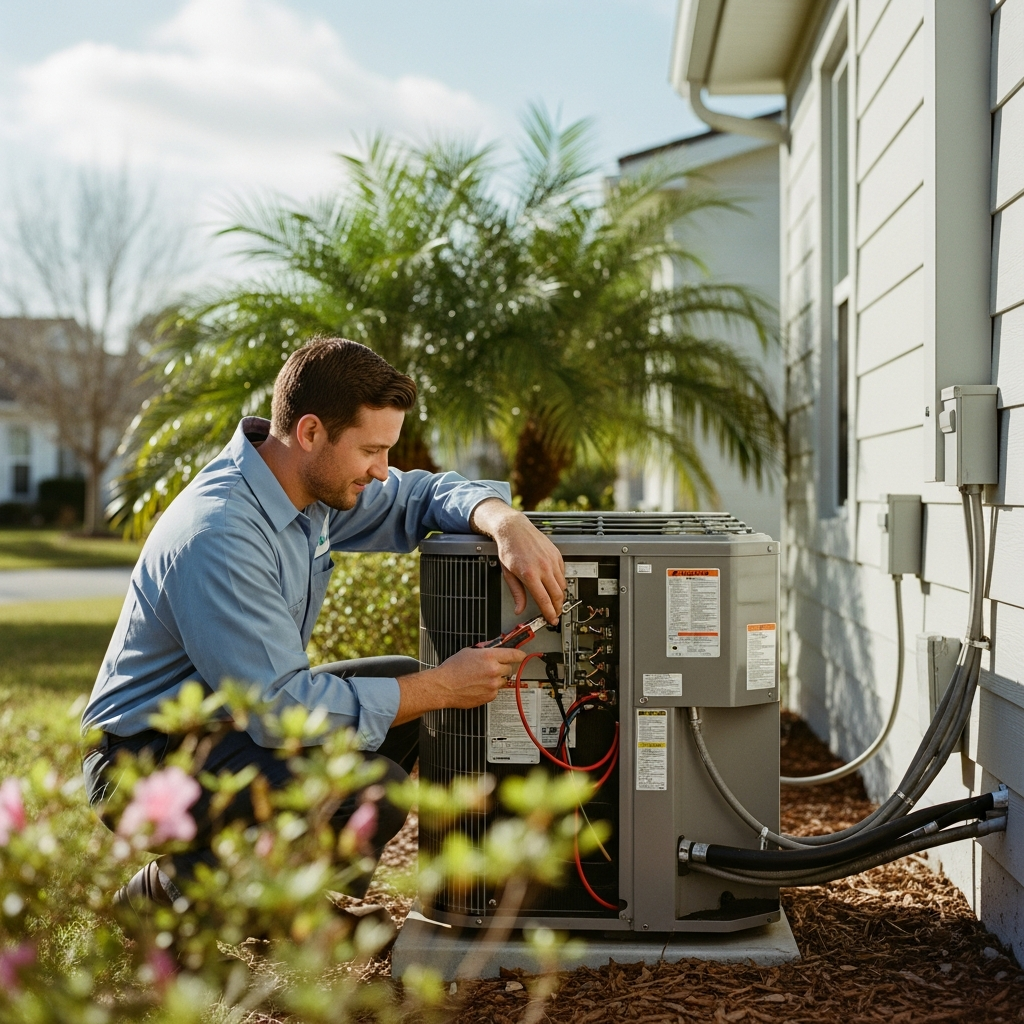
- Inspect electrical connections and capacitors
- Lubricate motors and bearings (if applicable)
- Test thermostat in cooling mode
- Measure temperature drop across evaporator
Universal System Components:
- Replace or inspect air filter
- Clean evaporator coil (reduces efficiency if dirty)
- Clear condensate drain line and treat to prevent algae
- Inspect condensate pump operation (if equipped)
- Check all duct connections for leaks
- Verify proper airflow at all registers
- Inspect insulation on refrigerant lines
- Test system startup and shutdown sequences
- Check voltage and amp draw on all motors
- Tighten all electrical connections
- Inspect outdoor unit mounting and leveling
Indoor Air Quality Assessment:
- Check for mold growth in air handler
- Inspect ductwork for dust accumulation
- Test air filter fit and seal
- Recommend IAQ upgrades if needed (UV lights, better filtration, dehumidifiers)
A thorough maintenance visit should take 60-90 minutes. If a technician is in and out in 20 minutes, they’re not performing comprehensive service.
The Cost-Benefit Analysis of February HVAC Maintenance
What February maintenance costs:
- Basic tune-up: $79-150 (Just Right Heating & Air offers $79 special)
- Comprehensive service: $150-200
- With repairs (if issues found): Variable
What February HVAC maintenance saves:
Avoided emergency service calls:
- July AC failure emergency call: $150-300 service call fee
- After-hours/weekend premium: +50-100%
- Average emergency repair: $300-800
- Potential savings: $450-1,100
Extended equipment lifespan:
- Well-maintained systems: 15-20 years
- Neglected systems: 8-12 years
- Premature replacement cost: $4,500-8,000
- Annual savings: $300-600 through extended life
Energy efficiency improvements:
- Dirty coils reduce efficiency: 10-20%
- Monthly cooling cost (May-Oct): $150-250
- Efficiency loss cost: $90-300 per summer
- Clean system recovery: $90-300 annual savings
Total potential value of $79 February HVAC maintenance: $540-1,400 in avoided costs and savings
That’s a 580-1,670% return on investment.
Why Waiting Until Your System Breaks Costs More
Many homeowners operate on a “if it ain’t broke, don’t fix it” mentality with HVAC systems. This approach costs significantly more over time:
The breakdown cascade:
Small problem (caught in February HVAC maintenance): Capacitor showing early failure signs
- February repair cost: $150
- Time without service: 1 hour
- Inconvenience: Minimal
Same problem ignored until summer failure:
- July emergency service call: $300+
- Compressor damaged from failed capacitor: $1,200-2,000
- Time without AC during heat wave: 3-5 days
- Hotel costs while waiting for repair: $400-600
- Total cost: $1,900-2,900
That $150 February fix becomes a $2,000+ summer nightmare.
February HVAC Maintenance Catches These Common Problems Early
Issues frequently discovered during February maintenance:
Electrical component deterioration:
- Capacitors showing high ESR (will fail by mid-summer)
- Contactors with pitting (causing hard starts)
- Loose connections causing voltage drops
- Why February matters: Replace before failure, not during emergency
Refrigerant leaks:
- Small leaks detected before charge drops critically low
- Prevents compressor damage from low refrigerant operation
- Why February matters: Fix leak and recharge before cooling season
Drain line restrictions:
- Algae/mold beginning to form in condensate line
- Prevents mid-summer overflow and water damage
- Why February matters: Clear before heavy condensation season
Dirty coils:
- Dust, pollen, and salt accumulation on condenser coil
- Reduces efficiency before peak cooling demand
- Why February matters: Clean before pollen season intensifies
Blower motor bearing wear:
- Unusual sounds or high amp draw indicate impending failure
- Replace before motor seizes in July
- Why February matters: Avoid no-airflow emergency
How February Weather Benefits Outdoor Unit Service
February’s mild temperatures in Northwest Florida create ideal conditions for servicing outdoor units:
Average February temperatures in the Panhandle:
- Daily highs: 65-68°F
- Daily lows: 43-46°F
- Rainfall: Moderate (4-5 inches/month)
- Humidity: Lower than summer (but still Florida)
Why this weather helps:
Comfortable working conditions: Technicians can thoroughly clean coils, inspect components, and perform detailed work without extreme heat
System testing possible: Can test both heating and cooling modes without making your home uncomfortable
Coil cleaning more effective: Cooler temperatures mean coils can be safely cleaned with stronger solutions without overheating concerns
Outdoor electrical work safer: Lower humidity reduces electrical hazards during connection inspection and tightening
Parts and equipment accessible: Outdoor units often surrounded by landscaping; February means less vegetation interference
What Happens If You Skip February and Wait Until May?
By May, several problems emerge:
Availability crisis:
- First heat wave (typically mid-to-late April) triggers rush of service calls
- Companies booked 2-3 weeks out for maintenance
- Your appointment might not happen until June
Temperature dependence:
- May temperatures already reaching 85-90°F regularly
- You can’t afford to be without AC during maintenance
- Any discovered problems create immediate urgency
Stressed systems:
- AC has been running for weeks under increasing load
- Early-season failures already occurring
- Parts availability becoming problematic
Pollen season peak:
- Spring pollen at maximum levels
- Outdoor work less pleasant
- Dirty filters and coils already compromised
Higher costs:
- Seasonal pricing may increase as demand rises
- Emergency premiums apply if system fails before scheduled maintenance
The Two-Visit Strategy: Why Some Homes Need Fall Maintenance Too
While February is the most important maintenance window, some Florida homes benefit from a two-visit annual strategy:
February maintenance focuses on:
- Preparing cooling system for summer
- Post-winter heating system check
- Deep cleaning before pollen season
October/November maintenance focuses on:
- Post-summer cooling system assessment
- Preparing heating system for winter
- Addressing wear from intense cooling season
Homes that benefit from two annual visits:
- Systems over 10 years old (more prone to problems)
- Coastal properties (salt air accelerates corrosion)
- Homes with indoor air quality concerns
- Large homes with high runtime demands
- Homes with extended family or health concerns
Just Right Heating & Air Conditioning offers maintenance plans with two annual visits included, providing comprehensive year-round protection.
Making February Maintenance a Habit
The key to maximizing your HVAC investment is making February maintenance automatic:
Set it and forget it strategies:
Calendar reminder: Add recurring annual reminder in January to “Schedule February HVAC maintenance”
Maintenance agreements: Join a maintenance plan that automatically schedules your February service
Tax return timing: Plan to use tax return for home maintenance, including HVAC service
New Year’s resolution: Make “Schedule HVAC maintenance” part of your annual home care goals
Link to other February tasks: Bundle with other annual home maintenance (smoke detector batteries, HVAC filter subscription, etc.)
What to Expect During Your February Maintenance Visit
Understanding the process helps you prepare and ensures you receive thorough service:
Before the technician arrives:
- Clear access to both indoor and outdoor units
- Write down any concerns or unusual sounds/smells
- Note any rooms with comfort issues
- Have recent utility bills available (helps identify efficiency problems)
During the visit (60-90 minutes):
- Technician will inspect both indoor and outdoor components
- Testing of all system functions
- Cleaning of key components
- Measurement of system performance
- Discussion of findings and recommendations
After the visit:
- Written report of findings
- Recommendations prioritized by urgency
- Estimates for any needed repairs
- Maintenance completion certification
- Next service reminder scheduled
Questions to ask your technician:
- “Did you find any problems or concerns?”
- “How does my system’s performance compare to optimal?”
- “What’s the condition of my refrigerant charge?”
- “How do my coils look?”
- “Are all electrical components in good condition?”
- “What should I monitor before next service?”
Schedule Your February HVAC Maintenance Today
Don’t wait until your system fails during the first heat wave. Take advantage of February’s ideal timing to ensure your HVAC system is ready for another demanding Florida year.
Just Right Heating & Air Conditioning makes February maintenance easy with our $79 tune-up special—comprehensive service at an affordable price. Our experienced technicians understand Northwest Florida’s unique climate challenges and provide thorough inspections that catch problems early.
We serve Crestview, Niceville, Fort Walton Beach, Valparaiso, and surrounding areas with honest, professional HVAC maintenance that protects your comfort and your investment.
Call 850-362-9256 today to schedule your February maintenance appointment before our calendar fills up. February won’t last forever—take advantage of this optimal maintenance window while it’s here.
Our family-owned company has been keeping Northwest Florida homes comfortable since 2003. We understand that maintaining your HVAC system isn’t exciting, but it’s essential. Let us make it easy, affordable, and thorough.
Learn more: The U.S. Department of Energy provides comprehensive guidance on HVAC system maintenance and efficiency to help homeowners maximize system performance and lifespan.

Joshua Kuenzel is the owner and lead technician of Just Right Heating and Air Conditioning in Crestview, FL. A licensed Florida HVAC contractor (CAC1820142) and EPA certified technician with experience since 2006, Joshua founded the company in 2003 to provide honest, affordable HVAC service to Northwest Florida families.