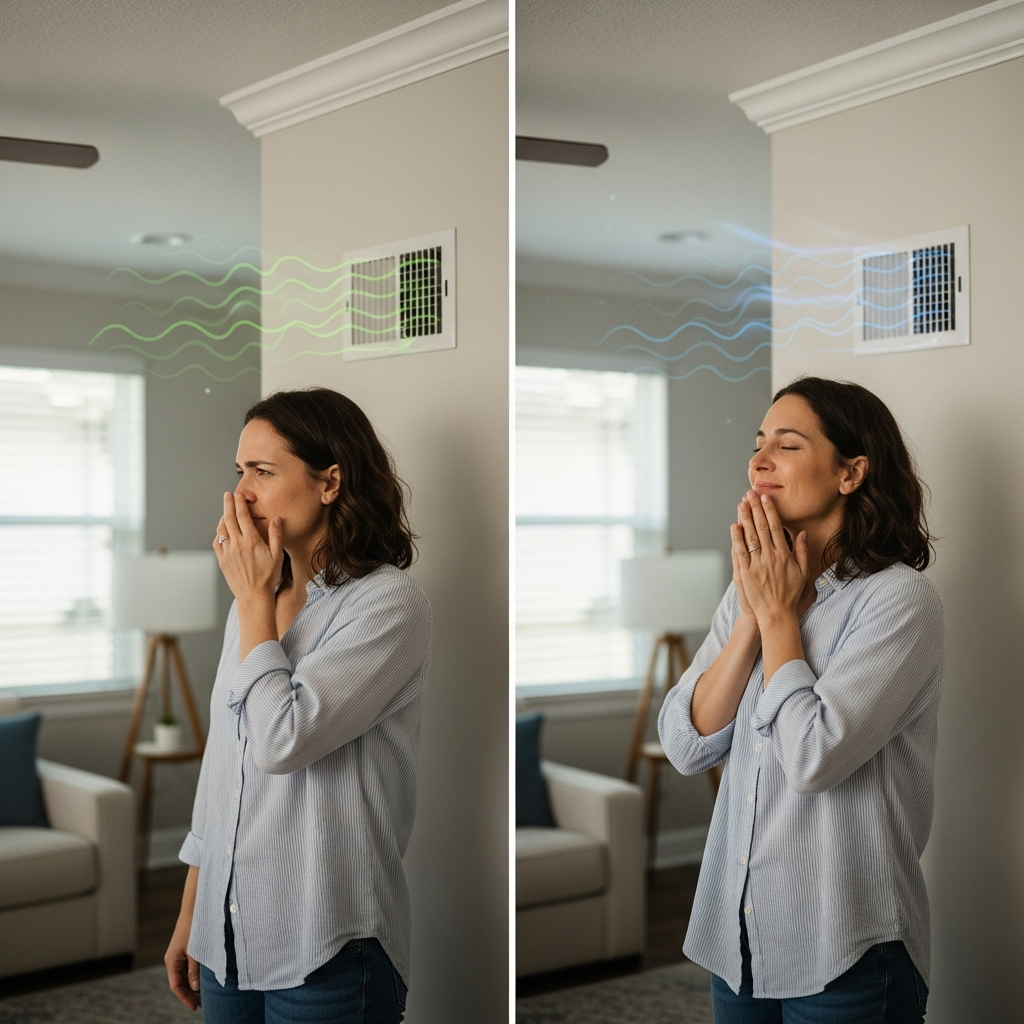
If you’ve turned on your heat for the first time this season in Crestview, Niceville, Fort Walton Beach, or Valparaiso and immediately noticed a musty, stale, or mildew-like odor filling your home, you’re experiencing one of the most common HVAC complaints in Northwest Florida. That unpleasant smell isn’t just annoying—it’s often a sign of a problem that needs attention.
While it’s tempting to dismiss the odor as “just dust burning off,” in Florida’s humid climate, musty smells from your heating system usually indicate mold, mildew, or bacterial growth somewhere in your HVAC system. Understanding what causes these odors, whether they’re dangerous, and how to eliminate them will help you breathe easier—literally.
Why Does My Heater Smell Musty When I First Turn It On?
A musty smell when you turn on your heater typically indicates mold or mildew growth inside your HVAC system, ductwork, or air handler. In Florida’s humid climate, moisture accumulates in dark HVAC components during months when heating isn’t used. When you finally activate your heating system, the airflow distributes these mold spores and musty odors throughout your home. While some dust burning off is normal during first use, persistent musty smells indicate biological growth that requires cleaning.
The Main Causes of Musty Heating System Odors
Mold and Mildew in the Air Handler
Your air handler—the indoor component that contains the blower and evaporator coil—is the most common source of musty odors. Here’s why:
- Dark, enclosed environment: Perfect for mold growth
- Moisture from condensation: During cooling season, water forms on the evaporator coil
- Dust accumulation: Provides food source for mold
- Stagnant air periods: When heating isn’t used for months, spores can germinate
When you haven’t run your heating system for several months (common in Florida from May through October), any residual moisture provides the perfect breeding ground for mold and mildew. When you turn on the heat, the blower pushes air across these contaminated surfaces, spreading spores and odors into your home.
Clogged or Dirty Air Filters
A neglected air filter doesn’t just restrict airflow—it becomes a biological hazard:
- Dust, pollen, pet dander, and skin cells accumulate
- Florida’s humidity keeps the filter damp
- Mold and bacteria colonize the organic material
- Musty odors develop and spread when air passes through
If you haven’t changed your filter in 2-3 months (or longer), this is likely contributing to the smell.
Mold Growth in Ductwork
Florida’s humid climate creates ideal conditions for mold growth inside ductwork:
- Ductwork in attics, crawl spaces, and garages experiences temperature fluctuations
- Condensation forms on cold duct surfaces when humid air contacts them
- Dust and debris inside ducts provide nutrients for mold
- Leaky ducts allow humid outdoor air to enter and condense
Once mold establishes itself in ductwork, every time your system runs, it distributes spores throughout your home.
Dirty Evaporator Coils
Your evaporator coil naturally accumulates moisture during air conditioning operation. If the coil has accumulated dust, dirt, or biological growth during the cooling season, that contamination remains dormant until you run the heating system. The heat and airflow reactivate dormant mold, causing musty odors.
Condensate Drain Pan Issues
The condensate drain pan collects water removed from your indoor air during cooling. In Florida’s climate, these pans rarely dry completely. Problems include:
- Standing water in the pan grows algae, bacteria, and mold
- Slow-draining or clogged pans create permanent moisture
- Biological growth produces strong musty or sewage-like odors
- When heating activates, the blower pulls these odors into your home
“Dead Animal” or “Rotting” Odors
Sometimes the smell isn’t mold—it’s literally a dead animal. Rodents, lizards, or insects can enter ductwork or HVAC components and die. When you turn on your heating system, the decomposition odor circulates throughout your home. This smell is distinctly different from musty mildew—it’s sharper, more pungent, and often localized to specific vents.
Is a Musty Smell from Your Heater Dangerous?
Yes, musty smells can indicate health hazards. Mold spores and bacterial growth in your HVAC system can cause or worsen:
- Allergic reactions: Sneezing, runny nose, itchy eyes, skin rashes
- Asthma attacks: Particularly in children and sensitive individuals
- Respiratory infections: Especially in people with compromised immune systems
- Chronic sinus problems: Persistent congestion, headaches, facial pressure
- Fatigue and cognitive issues: From prolonged mold exposure
While not all mold is toxic black mold (Stachybotrys), any mold growth in your HVAC system degrades indoor air quality and should be addressed promptly.
How to Get Rid of Musty Smell from Your Heating System
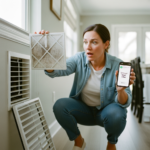
Step 1: Replace Your Air Filter Immediately
This is the easiest and most important first step:
- Turn off your heating system
- Locate your air filter (usually in the return air vent or air handler)
- Remove and inspect the old filter—if it’s gray, dirty, or has visible mold, that’s part of your problem
- Install a new, high-quality filter (MERV 8-11 recommended for Florida homes)
- Run your heating system and monitor whether the smell improves
Cost: $10-20 for a quality filter Time: 5-10 minutes Effectiveness: Solves the problem in 30-40% of cases
If the smell persists after 24-48 hours with a new filter, continue to the next steps.
Step 2: Clean or Replace Vent Covers and Registers
Dust, pet hair, and mold can accumulate on supply and return vents:
- Remove all vent covers and register grilles
- Vacuum thoroughly to remove loose debris
- Wash with warm, soapy water and a diluted bleach solution (1 part bleach to 10 parts water)
- Rinse completely and let dry before reinstalling
- This removes surface contamination that contributes to odors
Step 3: Inspect and Clean the Condensate Drain Pan
If you’re comfortable accessing your air handler:
- Turn off power to your HVAC system at the breaker
- Open the air handler access panel
- Locate the condensate drain pan (usually beneath the evaporator coil)
- Check for standing water, slime, or visible growth
- Clean the pan with a bleach solution or hydrogen peroxide
- Pour a cup of bleach or white vinegar down the condensate drain line to kill growth
- Clear any clogs in the drain line
Important: If you’re not comfortable doing this, call a professional. Water and electricity are a dangerous combination.
Step 4: Consider UV Light Installation
UV lights installed in your air handler kill mold, bacteria, and viruses:
- UV-C lights disrupt the DNA of microorganisms, preventing growth
- Particularly effective when positioned near the evaporator coil
- Provides continuous sterilization, preventing future mold growth
- Cost: $400-800 for professional installation
- Bulbs need replacement every 1-2 years ($50-100)
UV lights are highly effective for Florida homes with chronic mold problems.
Step 5: Schedule Professional Duct Cleaning
If musty odors persist after addressing the air handler, your ductwork likely needs professional cleaning:
- Professional duct cleaning removes years of dust, debris, and biological growth
- Uses specialized equipment including HEPA vacuums and rotary brushes
- Should include treatment with EPA-registered antimicrobial agents
- Dramatically improves indoor air quality
Cost: $300-800 depending on home size and duct complexity Frequency: Every 3-5 years in Florida’s humid climate, or when you notice persistent odors
Step 6: Professional Coil Cleaning
Evaporator coil cleaning should be part of annual HVAC maintenance:
- Professional-grade coil cleaners remove biological growth
- Improves efficiency by 10-15% while eliminating odors
- Prevents future mold growth when combined with proper drainage
- Should be performed annually as preventive maintenance
Preventing Musty Smells from Returning
Change Filters Religiously
In Florida’s humid climate with high pollen counts, change filters monthly during peak usage (heating and cooling seasons). This prevents the dust and debris accumulation that feeds mold growth.
Run Your System Periodically
Even during months when you don’t need heating or cooling, run your HVAC system for 10-15 minutes every few weeks. This:
- Circulates air and prevents moisture accumulation
- Dries out components where mold might grow
- Exercises mechanical components
- Prevents “first use” odor problems
Control Indoor Humidity
Keep indoor humidity between 45-55% to discourage mold growth:
- Use whole-home dehumidifiers if necessary
- Run bathroom exhaust fans during and after showers
- Ensure your condensate drain operates properly
- Fix any water leaks or sources of excess moisture promptly
Schedule Annual HVAC Maintenance
Professional maintenance should include:
- Evaporator coil cleaning
- Condensate drain cleaning and treatment
- Air handler inspection for mold growth
- Ductwork inspection
- Filter replacement
Consider Air Quality Upgrades
For homes with chronic mold problems:
- Whole-home air purifiers with HEPA filtration
- UV light systems for continuous sterilization
- Upgraded filtration (MERV 11-13 filters)
- Whole-home dehumidifiers for humidity control
When to Call a Professional for Musty Smell Issues
Contact an HVAC professional if:
- Musty smell persists after replacing the filter
- You see visible mold growth inside air vents or on registers
- Family members experience worsening allergy or respiratory symptoms
- The smell is accompanied by reduced airflow or system performance
- You detect sewage or “rotten egg” odors (could indicate serious drainage problems)
- You’re not comfortable accessing your air handler or performing cleaning
Professional indoor air quality services can identify the exact source of odors through comprehensive system inspections, provide thorough cleaning with professional-grade antimicrobial treatments, and recommend long-term solutions like UV lights or whole-home air purifiers. Just Right Heating & Air Conditioning specializes in diagnosing and resolving mold and mildew problems specific to Northwest Florida’s humid climate.
Special Considerations for Northwest Florida Homes
Our Gulf Coast climate presents unique challenges:
High Humidity Year-Round: Florida’s 74.5% average humidity means HVAC systems are constantly battling moisture. Mold prevention requires vigilance.
Salt Air Corrosion: Coastal areas experience accelerated corrosion of HVAC components, creating rough surfaces where mold can easily colonize.
Extended AC Season: Because we run air conditioning 8-10 months annually, condensation and moisture issues are more severe than in other climates.
Mild Winters: Long periods without heating use (May-November) allow mold to establish itself undisturbed before you discover the problem in December.
Severe Weather: Hurricanes and tropical storms can introduce water into HVAC systems and ductwork, creating immediate mold growth conditions.
The Bottom Line on Musty Heating Smells
That musty smell when you turn on your heat isn’t something to ignore or “get used to.” It’s your HVAC system warning you about mold, mildew, or bacterial growth that’s degrading your indoor air quality and potentially affecting your family’s health.
Start with the simple solutions—replace your filter, clean your vents, and ensure proper drainage. If the smell persists, professional cleaning and inspection will identify and eliminate the source. In Florida’s humid climate, preventing mold growth requires ongoing vigilance through regular maintenance, proper humidity control, and monthly filter changes.
Don’t let musty odors ruin your comfort or compromise your health. If you’re experiencing persistent musty smells from your heating system in Crestview, Niceville, Fort Walton Beach, or Valparaiso, contact Just Right Heating & Air Conditioning at 850-362-9256. Our indoor air quality specialists can identify the source of odors, clean your system thoroughly, and recommend solutions to prevent future problems.
We’ve been serving Northwest Florida families since 2003, and we understand the unique challenges our humid Gulf Coast climate presents for HVAC systems and indoor air quality.
Learn more: The Environmental Protection Agency provides comprehensive guidance on mold prevention and indoor air quality for homeowners concerned about biological growth in HVAC systems.

Joshua Kuenzel is the owner and lead technician of Just Right Heating and Air Conditioning in Crestview, FL. A licensed Florida HVAC contractor (CAC1820142) and EPA certified technician with experience since 2006, Joshua founded the company in 2003 to provide honest, affordable HVAC service to Northwest Florida families.