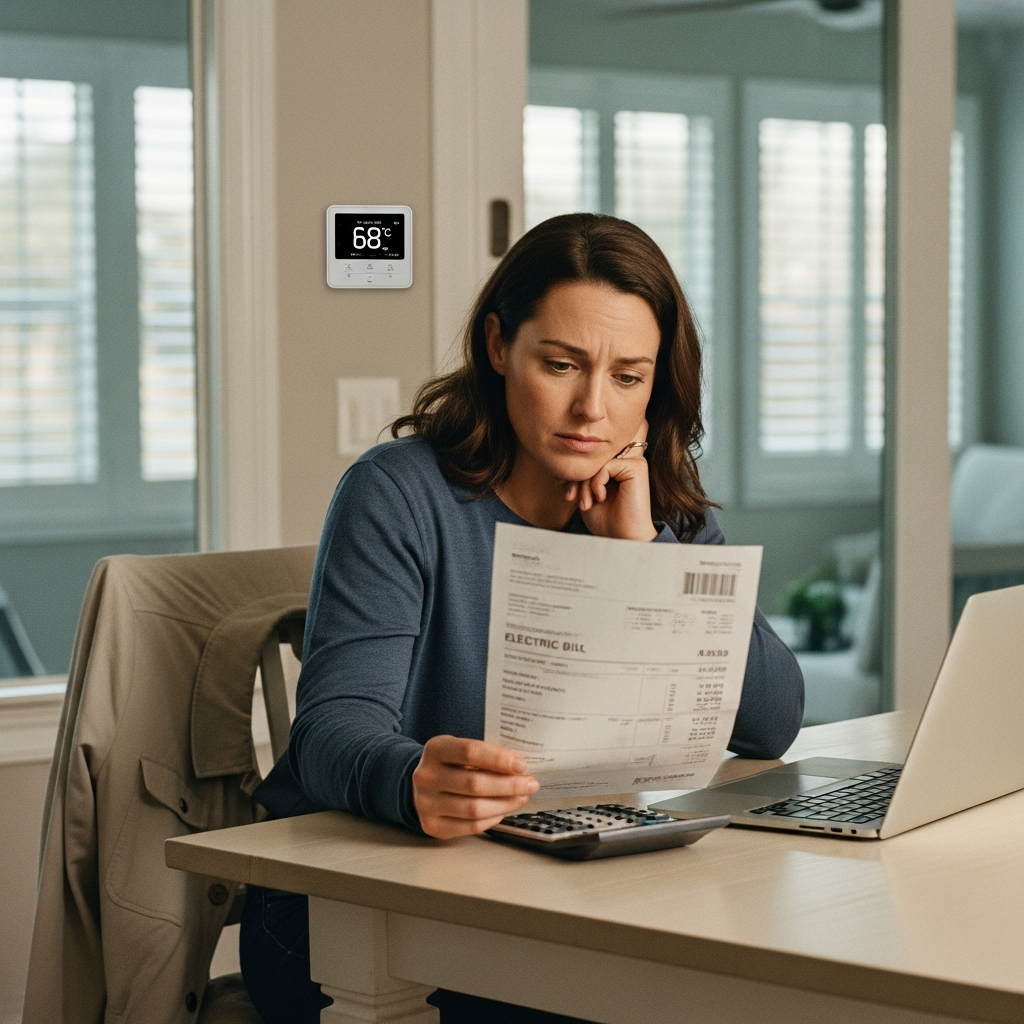
If you’ve ever opened your January electric bill in Crestview, Niceville, Fort Walton Beach, or Valparaiso and wondered why it’s suddenly $100-200 higher than your October bill, you’re not alone. Winter energy bill shock is one of the most common complaints HVAC professionals hear from Northwest Florida homeowners every year.
The frustrating part? Your home doesn’t feel any warmer despite the skyrocketing costs. Understanding why your energy bills spike during Florida’s winter months—and what you can actually do about it—can save you hundreds of dollars while keeping your family comfortable.
Why Do Energy Bills Increase in Winter in Florida?
Florida winter energy bills increase primarily due to heat pump inefficiency in cold weather, auxiliary heat activation, temperature fluctuations requiring frequent system cycling, and longer heating periods during extended cold snaps. Unlike summer when your AC runs at consistent efficiency, winter heating in Northwest Florida is far less predictable. A single week of below-freezing overnight temperatures can double your monthly electric bill compared to mild autumn months.
The Real Culprits Behind January Energy Bill Spikes
Auxiliary Heat Is Expensive—Really Expensive
The biggest energy cost driver during Florida winters is auxiliary heat, also called emergency heat or backup heat. Most heat pump systems in the Panhandle include electric resistance heat strips that automatically activate when outdoor temperatures drop below 35-40°F or when your heat pump cannot keep up with your thermostat setting.
Electric resistance heat uses 2-3 times more electricity than your heat pump’s normal operation. Here’s what that means in real numbers:
- Heat pump operation at 50°F outdoor temp: ~3-4 kW per hour = $0.36-48/hour at Florida’s average rates
- Auxiliary heat operation below 40°F: ~10-15 kW per hour = $1.20-1.80/hour
During a typical January cold snap when overnight temperatures stay in the 20s-30s for a week, your auxiliary heat might run 8-12 hours daily. That’s an extra $10-20 per day, or $70-140 per week, just from backup heat.
Temperature Swings Force Constant Cycling
Northwest Florida winters are characterized by dramatic temperature swings—50°F mornings followed by 75°F afternoons, then back to 35°F overnight. These fluctuations force your heating system to:
- Start and stop frequently (short cycling uses more energy)
- Constantly readjust to changing heating demands
- Switch between heat pump and auxiliary heat modes
- Work harder during rapid temperature drops
Each startup requires a surge of electricity. When your system cycles 15-20 times daily instead of running steadily, those startup costs accumulate significantly.
Heat Pumps Lose Efficiency in Cold Weather
As outdoor temperatures drop, your heat pump must work progressively harder to extract heat from cold air. The efficiency loss is substantial:
- At 50°F outdoor temp: Heat pump operates at 250-300% efficiency (delivers 2.5-3 times more heat than electricity consumed)
- At 40°F outdoor temp: Efficiency drops to 200-250%
- At 32°F outdoor temp: Efficiency may fall to 150-200%
- Below 25°F: Efficiency can drop below 150%, making it barely more efficient than resistance heat
This means your heat pump uses significantly more electricity per hour of operation during cold weather while producing less heat.
Longer Heating Periods Add Up
During mild autumn months (October-November), you might run your heating system 2-4 hours daily on cool mornings. In January during cold snaps, your system might run 12-16 hours daily or even continuously. Even at normal efficiency, quadrupling your heating runtime quadruples that portion of your bill.
Sealing Up Your Home Traps Moisture and Requires More Heating
When temperatures drop, you close windows and doors that might have been open during autumn. While this seems logical, it can create problems:
- Poor insulation allows heat to escape faster, forcing longer heating cycles
- Air leaks around doors and windows let cold air in continuously
- Your heating system must compensate for constant heat loss
Your Thermostat Settings Change
Be honest—you probably keep your thermostat at 68-70°F in January but were comfortable at 72-74°F in October when you were running AC. That seemingly small difference has a large impact because heating systems work harder per degree in winter than cooling systems do in summer.
How Much Should Your Electric Bill Increase in Winter?
For average Northwest Florida homes (1,500-2,000 sq ft), expect winter electric bills to increase 30-60% during normal winter weather and 70-100% during extended cold snaps compared to mild autumn months. A home with a $120 October bill might see $160-190 in normal January weather, or $200-240 during a severe cold snap. Homes with poor insulation, older heat pumps, or thermostat settings above 70°F often see even higher increases.
7 Ways to Lower Your Energy Bills Without Freezing
1. Lower Your Thermostat by Just 2-3 Degrees
This is the single most effective immediate action. Every degree you lower your thermostat saves approximately 3-5% on heating costs.
Instead of 70°F, try 67-68°F:
- Wear a sweater or sweatshirt indoors
- Use throw blankets on the couch
- Wear socks or slippers instead of going barefoot
At night, drop to 65°F:
- Use an extra blanket on beds
- Most people sleep better in cooler temperatures anyway
- Your body actually prefers 60-67°F for optimal sleep
For a home spending $200/month on heating, dropping from 70°F to 67°F can save $20-30 monthly.
2. Use a Programmable or Smart Thermostat Properly
Many homeowners have programmable thermostats but don’t use them effectively. Create a schedule that reduces heating when you don’t need it:
Weekday schedule:
- 6:00 AM – 8:00 AM: 68°F (morning routine)
- 8:00 AM – 5:00 PM: 65°F (everyone gone)
- 5:00 PM – 10:00 PM: 68°F (evening at home)
- 10:00 PM – 6:00 AM: 64-65°F (sleeping)
Important: Don’t dramatically change temperatures (like dropping to 55°F when gone). This forces your system to use expensive auxiliary heat to recover, negating any savings.
Smart thermostats like Nest or Ecobee learn your patterns and can save 10-15% on heating costs through optimized scheduling.
3. Stop Constantly Adjusting Your Thermostat
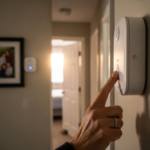
This is a hard habit to break, but it’s costly. Every time you raise your thermostat setting, you risk triggering auxiliary heat unnecessarily. The heat pump thinks “I need to catch up quickly” and activates expensive backup heat.
Instead:
- Set a reasonable temperature and leave it
- If you’re cold, add layers before touching the thermostat
- Make small adjustments (1 degree) if absolutely necessary
- Give your system 30-60 minutes to reach the new setting before adjusting again
4. Improve Your Home’s Insulation and Air Sealing
Heat loss costs you money continuously. Addressing these issues provides long-term savings:
Immediate fixes (DIY, low cost):
- Install door sweeps on exterior doors ($10-20 each)
- Apply weatherstripping around doors and windows ($30-50)
- Use draft stoppers or “door snakes” ($10-15)
- Close curtains at night to reduce heat loss through windows
- Open curtains during sunny days to gain free solar heat
- Install insulated outlet covers on exterior walls ($1-2 each)
Longer-term improvements:
- Add attic insulation (Florida building code recommends R-30 to R-49)
- Seal duct leaks (can improve efficiency 20-30%)
- Upgrade to double-pane windows if you have single-pane
- Insulate water heater and hot water pipes
Even basic weatherization can reduce heating costs by 15-25%.
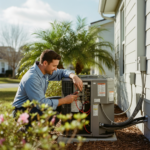
5. Maintain Your HVAC System Properly
A poorly maintained heating system uses 15-30% more energy than a well-maintained one. Essential maintenance includes:
DIY maintenance:
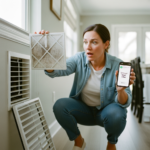
- Change air filters monthly during heating season ($5-15/month)
- Keep outdoor unit clear of leaves and debris
- Ensure all vents are open and unblocked by furniture
- Clean supply and return registers
Professional maintenance:
- Annual tune-up before winter ($79-150)
- Coil cleaning improves efficiency 10-15%
- Refrigerant level check ensures optimal operation
- Electrical component testing prevents auxiliary heat from running unnecessarily
A $79 tune-up that improves efficiency by 15% pays for itself in 1-2 months during winter.
6. Use Ceiling Fans in Reverse (Clockwise)
This often-overlooked tip can make your home feel 2-3 degrees warmer without touching the thermostat:
- Hot air rises and collects near the ceiling
- Running ceiling fans clockwise (reverse) on low speed pushes warm air down
- This recirculates warm air without creating a cooling breeze
- Particularly effective in rooms with high or vaulted ceilings
Look for a small switch on your ceiling fan motor to reverse direction. Run on the lowest speed to avoid creating a draft.
7. Address Specific Problem Areas
Close off unused rooms:
- If you have guest bedrooms or rooms you rarely use, close vents and doors
- Don’t heat space you’re not using
- Exception: Don’t close more than 10-15% of vents or you’ll create airflow problems
Use space heaters strategically:
- Small electric space heaters (1,500W) can heat the room you’re in
- This allows you to lower the whole-house thermostat
- Only cost-effective if you’re heating one small area instead of the whole house
- Never leave unattended; fire hazard
Focus heating where you spend time:
- Lower thermostat at night, use electric blankets in bedrooms (costs pennies)
- Raise thermostat only in rooms where you’re actively spending time
- Close bedroom doors during the day to avoid heating them unnecessarily
When High Energy Bills Indicate HVAC Problems
Sometimes high energy bills aren’t just about cold weather—they signal equipment problems:
Warning signs to call for service:
- Bills 50%+ higher than previous January (not your first winter in the home)
- System runs constantly but home stays cold
- Auxiliary heat runs even when outdoor temps are above 40°F
- Unusual noises or performance issues
- Ice buildup on outdoor unit that doesn’t clear
- System is more than 10-12 years old and increasingly inefficient
A professional HVAC maintenance visit can identify efficiency problems like low refrigerant, failing components, or incorrect thermostat settings that waste energy.
Understanding Your Electric Bill Breakdown
Florida electric bills typically show:
- Energy charge: The actual kWh consumed (this is where heating costs appear)
- Customer charge: Fixed monthly fee ($10-25)
- Fuel adjustment: Variable cost based on fuel prices
- Taxes and fees
Compare your January kWh usage to October. A home using 800 kWh in October might use 1,200-1,600 kWh in January. At $0.12/kWh, that’s $48-96 in additional energy costs just from increased usage.
The Long-Term Solution: System Upgrades
If winter energy bills are consistently painful, consider these upgrades:
Whole-home air sealing and insulation: $1,500-5,000 investment, saves 20-30% annually
High-efficiency heat pump replacement: Newer models (16+ SEER) are 20-40% more efficient than 10-15 year old systems
Dual-fuel system: Combines heat pump with gas furnace backup, uses cheaper gas instead of expensive electric resistance heat during extreme cold
Zoned HVAC system: Heat only the areas you’re using, not the entire house
These investments pay for themselves over time through reduced energy costs.
Take Control of Your Winter Energy Costs
January energy bill spikes in Northwest Florida are predictable and manageable. While you can’t control the weather, you can control how your home responds to it. The combination of lowering your thermostat by 2-3 degrees, improving basic weatherization, maintaining your HVAC system properly, and using your thermostat strategically can reduce winter heating costs by 20-40%.
Start with the free or low-cost solutions—thermostat adjustments, weatherstripping, filter changes—and you’ll see immediate results on next month’s bill. Then tackle longer-term improvements like insulation and professional HVAC maintenance for sustained savings year after year.
If you’re experiencing unusually high energy bills or suspect your heating system isn’t operating efficiently, contact Just Right Heating & Air Conditioning at 850-362-9256. Our technicians can perform an efficiency evaluation, identify problems, and provide honest recommendations to lower your energy costs while keeping your Crestview, Niceville, Fort Walton Beach, or Valparaiso home comfortable all winter long.
Learn more: The U.S. Department of Energy provides comprehensive guidance on reducing home heating costs with practical tips for improving efficiency and lowering energy bills.

Joshua Kuenzel is the owner and lead technician of Just Right Heating and Air Conditioning in Crestview, FL. A licensed Florida HVAC contractor (CAC1820142) and EPA certified technician with experience since 2006, Joshua founded the company in 2003 to provide honest, affordable HVAC service to Northwest Florida families.