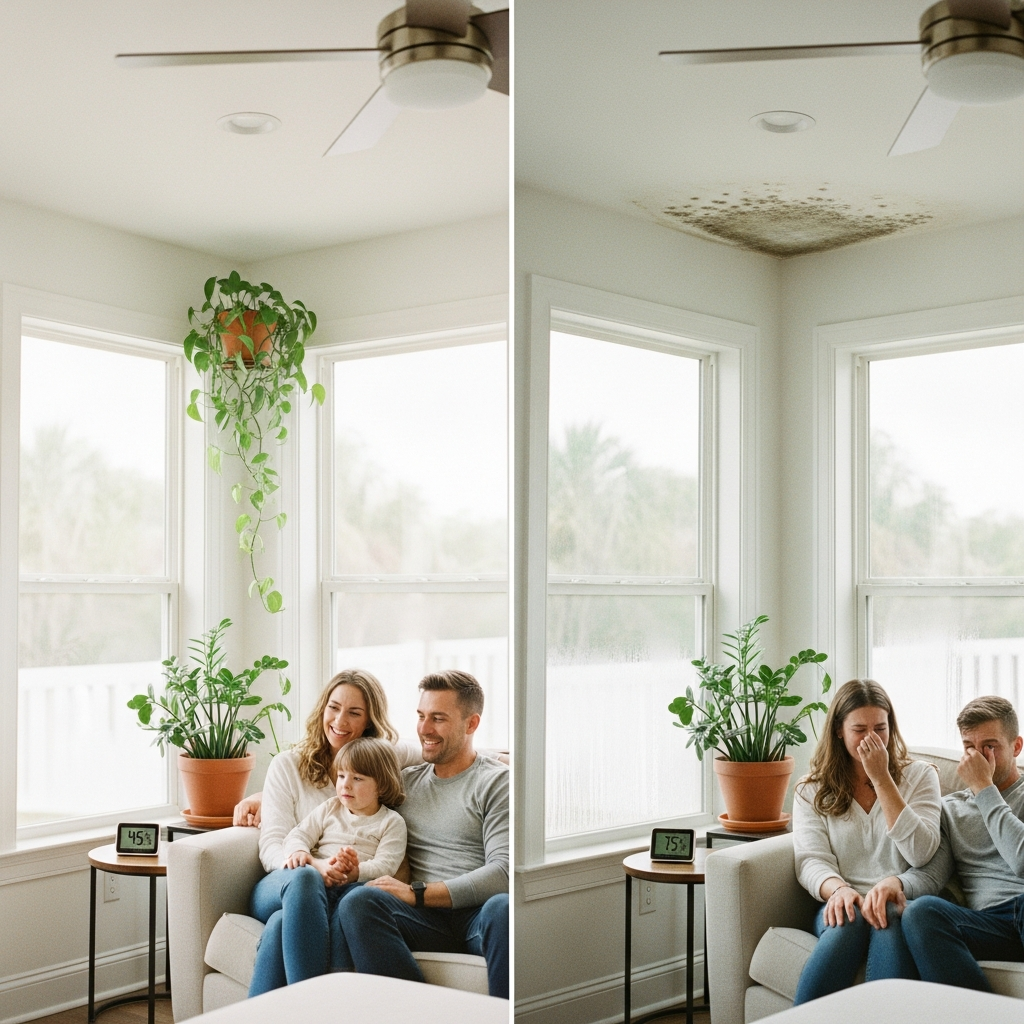
When most people think about Florida humidity problems, they picture sticky summer afternoons with the air conditioner running nonstop. But if you live in Crestview, Niceville, Fort Walton Beach, or Valparaiso, you know that winter humidity presents its own unique indoor air quality challenges—and they’re often worse than summer because they’re unexpected.
Even on cold January mornings when you’re running your heat, Northwest Florida’s humid Gulf Coast air is quietly creating the perfect conditions for mold growth, dust mite proliferation, and musty odors inside your home. Understanding how winter humidity affects your indoor air quality—and what to do about it—can protect your family’s health and your home’s structure.
What Is the Average Humidity in Florida During Winter?
Florida’s average relative humidity is 74.5% year-round, and winter months often see humidity levels between 70-90%, especially in coastal areas like the Panhandle. Unlike northern states where winter air is dry, Northwest Florida maintains high moisture levels throughout the year. Nighttime humidity regularly reaches 80-100%, and even mild winter days typically exceed 60% relative humidity. This persistent moisture creates ongoing indoor air quality challenges that differ significantly from summer humidity problems.
What Is the Ideal Indoor Humidity Level for Florida Homes?
The Environmental Protection Agency (EPA) recommends maintaining indoor relative humidity between 30-50% for optimal indoor air quality and health. However, for Florida homes specifically, indoor air quality experts recommend keeping humidity between 45-55% to balance comfort, mold prevention, and energy efficiency. Humidity levels consistently above 60% create conditions that encourage mold growth, dust mites, and bacterial proliferation—all of which can trigger allergies, asthma, and respiratory problems.
Why Is Winter Humidity a Problem for Indoor Air Quality?
During summer, your air conditioner runs constantly, removing moisture from the air as it cools. In winter, however, several factors conspire to trap humidity inside your home:
Reduced AC Operation
In Northwest Florida’s mild winters, your air conditioner runs far less frequently than in summer. Since AC systems dehumidify as they cool, shorter run times mean significantly less moisture removal. Your home can maintain uncomfortable humidity levels even when the temperature feels pleasant.
Heat Pumps Don’t Dehumidify Aggressively
Most Panhandle homes use heat pumps rather than furnaces. Heat pumps are excellent for heating in mild climates, but they don’t dry indoor air the way AC systems do. Heat pumps operate at lower output temperatures and shorter cycles during winter, providing minimal moisture removal compared to summer cooling operation.
Closed-Up Homes Trap Moisture
During cooler weather, homes stay closed up with windows shut and less air exchange with the outdoors. Daily activities like cooking, showering, dishwashing, and even breathing add moisture to indoor air. Without adequate ventilation or dehumidification, this moisture accumulates rather than escaping.
Crawl Spaces and Slab Foundations Stay Damp
Moisture stored under or beneath homes rises into living areas when ventilation slows in winter. Florida’s high water tables and frequent winter rain keep the ground saturated, contributing to indoor humidity even when outdoor temperatures are comfortable.
Warm Air Meets Cool Surfaces
When humid indoor air contacts cold windows, doors, or ductwork, condensation forms. This is why you often see water droplets on windows during winter mornings in the Panhandle—it’s a visible sign that your indoor humidity is too high.
What Indoor Air Quality Problems Does Winter Humidity Cause?
Mold and Mildew Growth
This is the most serious concern. When relative humidity exceeds 60% for extended periods, mold spores can germinate and grow on virtually any surface. In Florida homes, common mold growth locations include:
- Inside air handlers and ductwork
- On air conditioning registers and grilles
- In closets, especially on shoes, leather goods, and clothing
- Behind furniture against exterior walls
- On window sills and frames where condensation occurs
- In bathrooms and laundry rooms with inadequate ventilation
- On drywall in poorly ventilated areas
Mold exposure can cause:
- Allergic reactions (sneezing, runny nose, red eyes, skin rash)
- Asthma attacks in people with asthma
- Respiratory infections
- Chronic sinus congestion
- Headaches and fatigue
Dust Mite Proliferation
Dust mites thrive in humid environments and are one of the most common indoor allergens. These microscopic creatures live in bedding, upholstered furniture, and carpets, feeding on dead skin cells. They reproduce rapidly when humidity exceeds 50% and can trigger:
- Year-round allergic rhinitis
- Asthma symptoms
- Eczema flare-ups
- Chronic coughing, especially at night
Bacterial Growth
High humidity creates ideal conditions for bacteria to multiply in:
- HVAC drain pans and condensate lines
- Air handler cabinets
- Bathroom surfaces
- Kitchen areas
Musty Odors
That characteristic “closed-up house” smell isn’t just unpleasant—it’s often the odor of active mold, mildew, or bacterial growth. If your home smells musty when you’ve been away or when you first wake up, it’s a clear sign of humidity-related indoor air quality problems.
Structural Damage
Beyond health concerns, chronic high humidity can:
- Cause wood rot in framing and flooring
- Deteriorate drywall
- Damage insulation
- Corrode metal components
- Peel paint and wallpaper
- Warp wooden doors and cabinets
How Can You Tell If Your Home Has High Humidity?
Physical Signs:
- Condensation on windows, especially in the morning
- Foggy or “sweating” mirrors after showers
- Damp feeling to upholstery or bedding
- Musty or stale odors
- Visible mold on walls, ceilings, or in corners
- Rusted or corroded metal fixtures
- Peeling wallpaper or paint
Health Symptoms:
- Increased allergy or asthma symptoms indoors
- Chronic sinus congestion
- Persistent coughing, especially at night or in the morning
- Difficulty breathing comfortably indoors
- Skin irritation or rashes
Measuring Humidity Accurately: The most reliable way to assess indoor humidity is with a hygrometer—an inexpensive device (typically $10-20) available at hardware stores that measures relative humidity. Place hygrometers in several rooms, especially bedrooms, bathrooms, and laundry areas, to get an accurate picture of your home’s moisture levels.
Indoor air quality monitors provide even more comprehensive data, measuring not just humidity but also temperature, particulate matter, volatile organic compounds (VOCs), and carbon dioxide levels.
Does Running Your Heat Help with Indoor Humidity in Florida?
Running your heat pump or furnace has minimal effect on indoor humidity in Florida because heating systems don’t remove moisture from the air—they only add warmth. In fact, some heating methods can actually increase indoor humidity if combustion moisture is introduced into your home. The key difference from summer is that you’re not running the air conditioning system that actively dehumidifies as it cools, which is why winter humidity problems persist even when the heat is on.
Effective Solutions for Winter Indoor Air Quality Problems
Optimize Your HVAC System
Your heating and cooling system is your first line of defense against humidity:
Run Your AC Occasionally: On mild winter days (above 65°F), consider running your air conditioner for an hour or two rather than opening windows. This removes moisture effectively without bringing in humid outdoor air.
Use Fan Mode Strategically: Running your HVAC fan continuously improves air circulation and distributes conditioned air more evenly, though it doesn’t remove moisture by itself.
Ensure Proper Drainage: Check that your condensate drain line is clear. Clogged drains can cause water backup, creating humidity and mold growth inside your air handler. In Florida’s humid climate, algae growth in drain lines is common and requires periodic cleaning.
Install a Whole-Home Dehumidifier: For persistent humidity problems, a whole-home dehumidifier integrated with your HVAC system provides consistent moisture control regardless of heating or cooling needs. These systems can maintain ideal humidity levels year-round without overcooling your home.
Improve Air Filtration
Better filtration directly improves indoor air quality:
Upgrade to MERV 11-13 Filters: Higher-rated filters capture more mold spores, dust mite debris, pollen, and bacteria than basic fiberglass filters. In Florida’s humid climate, this significantly improves air quality.
Change Filters Monthly: Humid air carries more particles, so filters get dirty faster in Florida than in dry climates. Monthly replacement during high-use periods ensures optimal airflow and filtration.
Consider Air Purifiers: Portable HEPA air purifiers in bedrooms or high-traffic areas supplement your HVAC filtration, removing additional allergens and particulates.
Increase Ventilation Strategically
Ventilation removes stale, humid air and replaces it with fresh air—but in Florida, you must be strategic:
Use Bathroom Exhaust Fans: Always run bathroom exhaust fans during showers and for 30 minutes afterward to remove moisture before it spreads through your home.
Operate Kitchen Exhaust Fans: Use your range hood when cooking, especially when boiling water or steaming foods.
Ventilate Laundry Areas: If you have a dryer, ensure it vents outdoors, not into your garage or home. Consider running a dehumidifier in laundry rooms.
Monitor Outdoor Humidity: On rare winter days when outdoor humidity drops below 50%, opening windows for a few hours can help. However, check outdoor humidity first—bringing in 80% humidity air won’t improve indoor air quality.
Address Moisture Sources
Reduce the amount of moisture you introduce into your home:
Fix Leaks Promptly: Plumbing leaks, roof leaks, and foundation moisture intrusion contribute significantly to indoor humidity and mold growth.
Use Exhaust Fans: Never allow shower steam, cooking moisture, or laundry humidity to spread unchecked through your home.
Avoid Indoor Clothes Drying: Don’t hang wet laundry indoors to dry—this releases enormous amounts of moisture into your living space.
Maintain Proper Drainage: Ensure gutters, downspouts, and yard grading direct water away from your foundation.
The Critical Role of Professional HVAC Maintenance
Annual HVAC maintenance specifically addresses indoor air quality concerns:
Coil Cleaning: Dirty evaporator coils reduce dehumidification capacity and can harbor mold. Professional cleaning restores efficiency and removes biological growth.
Drain Line Servicing: Technicians clear and treat condensate drains to prevent algae growth and ensure proper moisture removal.
Airflow Optimization: Proper airflow is essential for both comfort and moisture control. Maintenance includes checking duct sealing, adjusting fan speeds, and ensuring proper system balance.
Indoor Air Quality Assessment: Professional indoor air quality services can identify specific problems in your home and recommend targeted solutions like UV lights, better filtration, or dehumidification systems.
When to Call Just Right Heating & Air Conditioning
If you’re experiencing any of these indoor air quality warning signs, it’s time for a professional assessment:
- Persistent musty odors despite cleaning
- Visible mold growth anywhere in your home
- Family members experiencing worsening allergy or asthma symptoms indoors
- Condensation on windows every morning
- Humidity readings consistently above 60%
- Mold or mildew appearing on clothing, shoes, or furniture
Our indoor air quality specialists can evaluate your home’s specific challenges and recommend effective, affordable solutions. From whole-home dehumidifiers to advanced filtration systems, we offer comprehensive approaches to creating healthier indoor air in Northwest Florida’s unique climate.
Don’t wait until mold problems become severe or health symptoms worsen. Contact Just Right Heating & Air Conditioning at 850-362-9256 to schedule an indoor air quality assessment. We serve Crestview, Niceville, Fort Walton Beach, Valparaiso, and surrounding areas with honest, professional HVAC services focused on your family’s comfort and health.
Learn more: The Environmental Protection Agency provides comprehensive guidance on indoor air quality and mold prevention for homeowners concerned about moisture-related health risks.

Joshua Kuenzel is the owner and lead technician of Just Right Heating and Air Conditioning in Crestview, FL. A licensed Florida HVAC contractor (CAC1820142) and EPA certified technician with experience since 2006, Joshua founded the company in 2003 to provide honest, affordable HVAC service to Northwest Florida families.