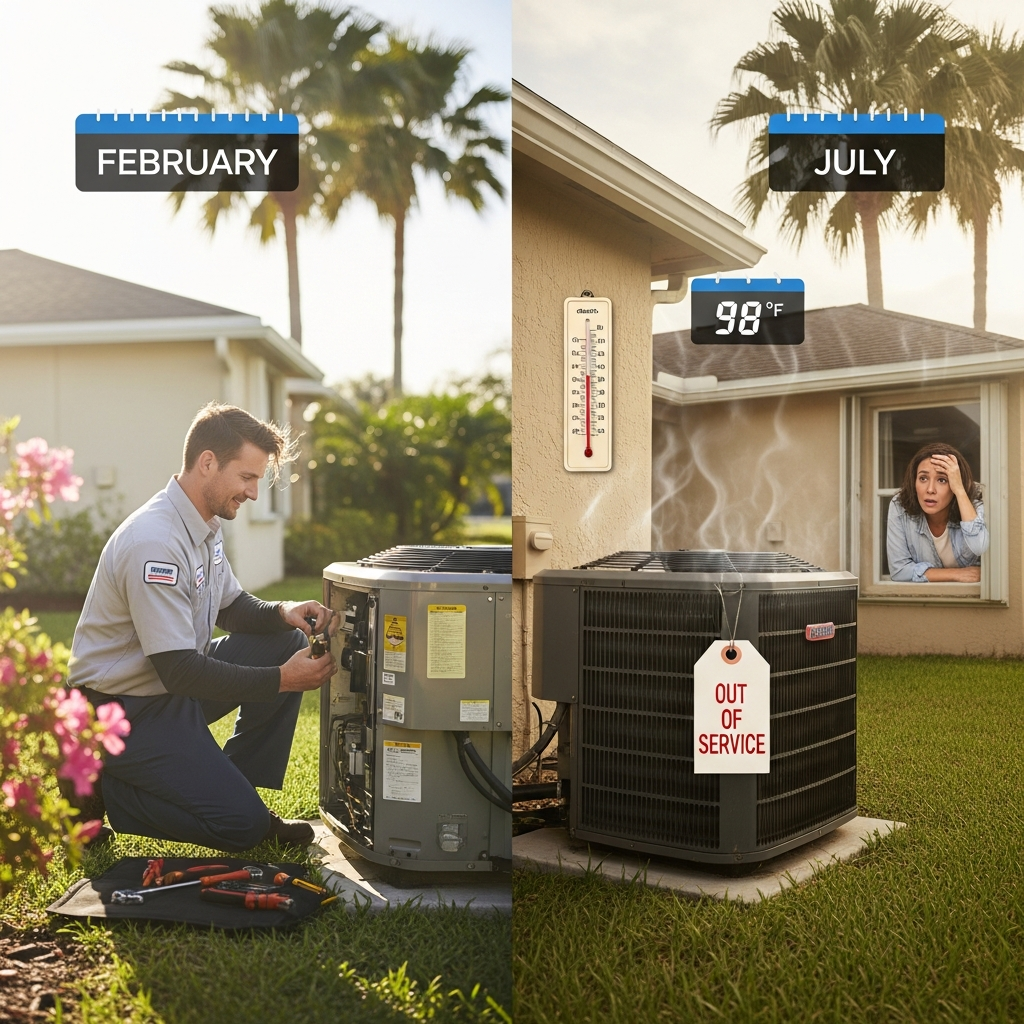
If you wait until May to think about your air conditioning in Crestview, Niceville, Fort Walton Beach, or Valparaiso, you’re already too late. By the time Northwest Florida temperatures hit the upper 80s and everyone realizes their AC needs service, HVAC companies are booked solid with emergency calls from systems that failed under the sudden workload.
Smart homeowners in the Panhandle know that February and March are the ideal months to prepare your air conditioning for the grueling Florida summer ahead. Early preparation means you’ll avoid the rush, catch small problems before they become expensive emergencies, and ensure your system is ready when that first 90-degree day arrives—often earlier than you expect.
When Should You Schedule Air Conditioning Maintenance in Florida?
The best time to schedule air conditioning maintenance in Florida is during early spring, ideally in February or March, before temperatures consistently reach the upper 80s. This timing allows you to beat the seasonal rush when HVAC companies become overwhelmed with service calls, ensures flexible scheduling, and catches potential problems before your system faces peak summer workloads. In Northwest Florida, waiting until May or June often means waiting days or weeks for service appointments during the busiest period of the year.
Why February and March Are the Sweet Spot for AC Preparation
Avoid the Summer Rush
Once temperatures spike in late April and May, HVAC companies receive a flood of service calls from homeowners whose air conditioning systems can’t keep up with the heat. Emergency repairs take priority over routine maintenance, which means:
- Maintenance appointments may be scheduled weeks out
- Service costs can be higher during peak season
- You risk going days without air conditioning while waiting for an appointment
- Technicians are rushed, potentially missing issues that could have been caught during a thorough off-season inspection
By scheduling in February or March, you get:
- Immediate or next-day appointments
- Unhurried, thorough inspections
- Better availability for your preferred service times
- Often discounted rates during slower periods
Catch Problems Before They Become Emergencies
Air conditioning systems don’t typically fail all at once—they show warning signs first. During winter, minor issues like a slowly developing refrigerant leak, a capacitor nearing failure, or a blower motor bearing wearing down might not be obvious because your system isn’t working hard. But when temperatures soar and your AC runs 12+ hours daily, these minor issues cascade into complete system failures.
February maintenance catches these problems when they’re still inexpensive to fix:
- A $150 capacitor replacement in March beats a $400 emergency service call in July
- A refrigerant leak topped off in February prevents compressor damage by June
- A worn blower motor identified early can be replaced on your schedule, not during a heat wave
Test Your System Under Controlled Conditions
By scheduling maintenance in late winter, you can test your air conditioning system before you’re desperately dependent on it. If problems are discovered, you have time to:
- Get multiple quotes for major repairs
- Research financing options if needed
- Consider system replacement without the pressure of emergency circumstances
- Plan for the expense rather than facing an unexpected crisis
Ensure Peak Efficiency from Day One
A properly maintained air conditioning system operates 15-25% more efficiently than a neglected one. When you prepare your AC in February, you ensure maximum efficiency from the first hot day through the entire summer. This translates directly to lower energy bills starting in April and continuing through October—Florida’s extended cooling season.
How Often Should You Service Your AC in Florida?
Florida homeowners should service their air conditioning systems twice annually—once in early spring (February-March) before summer and once in fall (October-November) after the peak cooling season. Florida’s extended cooling season, high humidity levels, and year-round HVAC operation create more wear on systems than in temperate climates. Twice-yearly professional maintenance helps prevent breakdowns, maintains efficiency, and extends equipment lifespan in demanding Florida conditions.
What Should AC Maintenance Include?
Professional air conditioning maintenance is far more comprehensive than simply changing your filter. A thorough spring tune-up should include:
Air Filter Inspection and Replacement
Your air filter should be inspected and replaced if dirty. In Florida’s humid climate with high pollen counts, filters accumulate debris quickly. A clogged filter:
- Restricts airflow by up to 50%, forcing your system to work harder
- Reduces efficiency and increases energy consumption
- Can cause the evaporator coil to freeze
- Allows dust and allergens to circulate through your home
Evaporator and Condenser Coil Cleaning
This is one of the most important maintenance tasks for Florida air conditioning systems. Dirty coils are a major problem in humid coastal climates because:
The outdoor condenser coil collects pollen, grass clippings, salt air, sand, and debris. When coils are dirty, they can’t release heat effectively, causing:
- Reduced cooling capacity
- Increased energy consumption (up to 30% higher bills)
- Compressor strain and potential failure
- Complete system shutdown on the hottest days
The indoor evaporator coil can develop mold, mildew, and biological growth in Florida’s humidity. This reduces efficiency and circulates contaminants through your home.
Professional coil cleaning removes these obstructions and restores your system to peak performance.
Refrigerant Level Check and Adjustment
Your air conditioning system requires precise refrigerant levels to operate efficiently. Technicians should:
- Measure refrigerant pressure and temperature
- Check for leaks using electronic leak detectors
- Add refrigerant if levels are low
- Identify the source of leaks for repair
Low refrigerant reduces cooling capacity and can damage your compressor—the most expensive component to replace. In Florida’s intense heat, running with low refrigerant is particularly damaging.
Electrical Component Inspection and Testing
Florida’s heat, humidity, and frequent thunderstorms stress electrical components. Maintenance should include:
- Testing the capacitor (provides the electrical jolt to start motors)
- Inspecting contactor switches for pitting or burning
- Checking electrical connections for corrosion or looseness
- Testing the compressor and fan motor electrical draw
- Verifying thermostat calibration and operation
- Inspecting control boards for signs of failure
Electrical failures are among the most common causes of summer AC breakdowns. Catching failing capacitors or contactors during spring maintenance prevents mid-summer emergencies.
Condensate Drain Line Cleaning
This is crucial in Florida. Your air conditioning system removes gallons of moisture from your indoor air daily, and that water must drain away properly. The condensate drain line should be:
- Flushed to remove algae and mold buildup
- Treated with biocide tablets to prevent future growth
- Inspected for clogs or slow drainage
- Checked to ensure proper drainage slope
A clogged condensate drain can cause:
- Water backup into your air handler
- Overflow that damages ceilings, walls, or flooring
- Automatic system shutdown (many systems have safety switches)
- Mold growth inside your air handler
In Northwest Florida’s humidity, algae can clog drain lines in just a few months without proper treatment.
Blower Motor and Assembly Inspection
The blower motor runs thousands of hours annually in Florida. Technicians should:
- Lubricate motor bearings if applicable
- Inspect the blower wheel for dirt buildup
- Check for proper wheel balance and alignment
- Verify correct fan speeds
- Clean the blower assembly if needed
Dirt accumulation on blower components reduces airflow and strains the motor. In Florida’s dusty, humid conditions, this buildup occurs faster than in dry climates.
Thermostat Calibration and Testing
Your thermostat should be tested to ensure:
- Temperature readings are accurate
- Cooling cycles start and stop properly
- Settings are programmed for summer efficiency
- Batteries are fresh (if applicable)
A thermostat that’s even 2-3 degrees off can waste significant energy and reduce comfort.
Overall System Performance Evaluation
Finally, technicians should measure:
- Air temperature drop across the evaporator coil (should be 15-20°F)
- Airflow at registers throughout your home
- Overall system capacity and efficiency
- Unusual sounds, vibrations, or odors
DIY Steps to Prepare Your Air Conditioning for Summer
While professional maintenance is essential, homeowners can take several preparatory steps:
Replace Your Air Filter
Install a fresh filter before summer begins. In Florida, plan to replace filters monthly during heavy-use periods (May-October). Higher-quality filters (MERV 8-11) provide better filtration than cheap fiberglass filters.
Clear the Outdoor Unit
Your outdoor condenser needs proper airflow:
- Remove leaves, grass clippings, and debris from around the unit
- Trim vegetation back at least 2 feet on all sides
- Clear any items stored near the unit (yard tools, lawn furniture, etc.)
- Gently rinse the outdoor coil with a garden hose (spray from inside out)
Never use a pressure washer on coils—it can damage the delicate fins.
Clean Supply and Return Vents
Remove vent covers and vacuum any accumulated dust. Wipe covers clean before reinstalling. Ensure furniture, curtains, or rugs aren’t blocking vents.
Check Your Thermostat
Test that your air conditioning responds properly when you lower the temperature setting. If you have a programmable thermostat, review and update your summer schedule.
Inspect Visible Ductwork
Look for disconnected or damaged duct sections in attics, crawl spaces, or garages. Sealing duct leaks can improve efficiency by 20% or more.
Test Your System Before You Need It
On a mild day in March, run your air conditioning for an hour and observe:
- Does cool air come from all vents?
- Does the outdoor unit start promptly when the thermostat calls for cooling?
- Are there any unusual noises, odors, or performance issues?
- Does the system cycle off when it reaches the set temperature?
If you notice problems during this test, schedule service immediately while you still have time.
What Are the Signs Your AC Needs Service Before Summer?
Schedule professional service immediately if you notice:
Weak Airflow
Reduced airflow indicates potential blower problems, duct leaks, or severe filter restriction.
Warm Air from Vents
If your system runs but doesn’t cool, you likely have refrigerant issues, compressor problems, or thermostat failures.
Strange Noises
Grinding, squealing, or banging sounds indicate mechanical problems that will worsen under summer workloads.
Moisture or Leaks
Water around your indoor unit signals condensate drain problems. Refrigerant leaks may appear as ice on refrigerant lines.
Frequent Cycling
If your system turns on and off every few minutes, it indicates electrical problems, refrigerant issues, or thermostat malfunctions.
Higher Energy Bills
A sudden spike in electricity costs without increased usage suggests your system is losing efficiency.
Musty Odors
Mold or mildew smells indicate biological growth in your air handler or ductwork—common in Florida’s humidity.
The Real Cost of Skipping Spring AC Maintenance
Consider what neglecting spring maintenance can cost:
Emergency Repairs: A $150 spring tune-up can prevent a $1,500 compressor replacement in July. Emergency service calls during heat waves cost 50-100% more than scheduled maintenance.
Energy Waste: A poorly maintained system uses 15-30% more electricity. For a Florida home spending $200/month on cooling, that’s $30-60 monthly—$240-480 over a summer season.
Reduced Lifespan: Air conditioning systems in Florida typically last 10-15 years with proper maintenance, but only 7-10 years without it. Skipping maintenance can shorten your system’s life by 3-5 years, costing thousands in premature replacement.
Comfort Loss: The most immediate cost is discomfort—going days without air conditioning during Florida summer heat while waiting for emergency repairs.
Schedule Your Spring AC Maintenance with Just Right Heating & Air Conditioning
Don’t wait until your air conditioning fails during the first heat wave. Take advantage of February and March’s ideal maintenance window to ensure your system is ready for Northwest Florida’s demanding summer.
Just Right Heating & Air Conditioning offers comprehensive spring air conditioning service that includes all the crucial maintenance tasks your system needs. Our $79 tune-up special provides exceptional value while preparing your AC for months of reliable operation.
We serve Crestview, Niceville, Fort Walton Beach, Valparaiso, and surrounding areas with honest, professional HVAC service. Our family-owned company understands the unique challenges that Gulf Coast humidity and heat present for air conditioning systems, and we’re committed to keeping your home comfortable all summer long.
Contact us today at 850-362-9256 to schedule your spring air conditioning maintenance. Beat the rush, avoid emergency breakdowns, and enjoy peace of mind knowing your AC is ready for whatever summer brings.
Learn more: The U.S. Department of Energy offers comprehensive guidance on air conditioning maintenance and energy efficiency to help homeowners reduce cooling costs and extend equipment life.

Joshua Kuenzel is the owner and lead technician of Just Right Heating and Air Conditioning in Crestview, FL. A licensed Florida HVAC contractor (CAC1820142) and EPA certified technician with experience since 2006, Joshua founded the company in 2003 to provide honest, affordable HVAC service to Northwest Florida families.