If you live in Crestview, Niceville, Fort Walton Beach, or Valparaiso and you’ve noticed your heat pump running constantly during cold snaps—or your energy bills spiking in January—you’re experiencing a well-documented physics problem that affects pumps across Northwest Florida.
Heat pumps are excellent heating solutions for our climate most of the time, but they face real performance challenges when outdoor temperatures drop into the 30s and low 40s. Understanding why this happens, what’s normal versus what requires service, and how to manage your system during cold weather will help you stay comfortable without unnecessary service calls or sky-high utility bills.
Do Heat Pumps Work in Cold Weather?
Yes, heat pumps work in cold weather, but their efficiency decreases as temperatures drop. Modern pumps can operate effectively down to temperatures as low as 25-30°F, and cold-climate models can function down to -15°F. However, standard heat pumps in Florida lose significant heating capacity when outdoor temperatures fall below 40°F, which is why you notice your system struggling during January cold snaps in the Panhandle.
How Does a Heat Pump Actually Heat Your Home?
Unlike furnaces that create heat by burning fuel, heat pumps transfer existing heat from one location to another. Even cold outdoor air contains heat energy—pumps extract that warmth and move it inside your home using a refrigeration cycle, similar to how your refrigerator works but in reverse.
This process works remarkably well in moderate temperatures, which is why heat pumps are so popular in Florida. They provide both heating and cooling, they’re energy-efficient, and they handle our typical winter weather beautifully. The challenge arises because of basic physics: the colder the outdoor air, the less heat energy is available to extract.
What Temperature Do Heat Pumps Stop Working Efficiently?
Heat pumps begin losing efficiency around 40-45°F and experience significant performance drops below 32°F. Here’s what happens at different temperature ranges in the Crestview area:
Above 50°F: Your pump operates at peak efficiency, easily maintaining indoor comfort while using minimal energy. This is the sweet spot for heat pump performance.
40-50°F: Efficiency begins declining. Your system runs longer cycles to maintain the same indoor temperature, and you’ll notice it operating more frequently throughout the day.
Below 40°F: Heat pump efficiency drops significantly. Many systems struggle to keep up with heat loss from your home, and this is when auxiliary heat typically activates automatically.
Below 32°F: At freezing temperatures, standard pumps can lose up to 50% of their heating capacity compared to their performance at 50°F. The system may run almost continuously during overnight cold snaps.
Why Do Heat Pumps Lose Efficiency in Cold Weather?
Heat pumps extract heat from outdoor air using refrigerant that absorbs thermal energy. When outdoor temperatures drop, the refrigerant has difficulty absorbing enough heat because there’s simply less thermal energy available in cold air. The compressor must work harder and run longer to extract the same amount of heat, consuming more electricity and producing less warmth. This is not a malfunction—it’s a fundamental limitation of heat transfer physics.
What Are Auxiliary Heat Strips and Why Does Your Bill Spike?
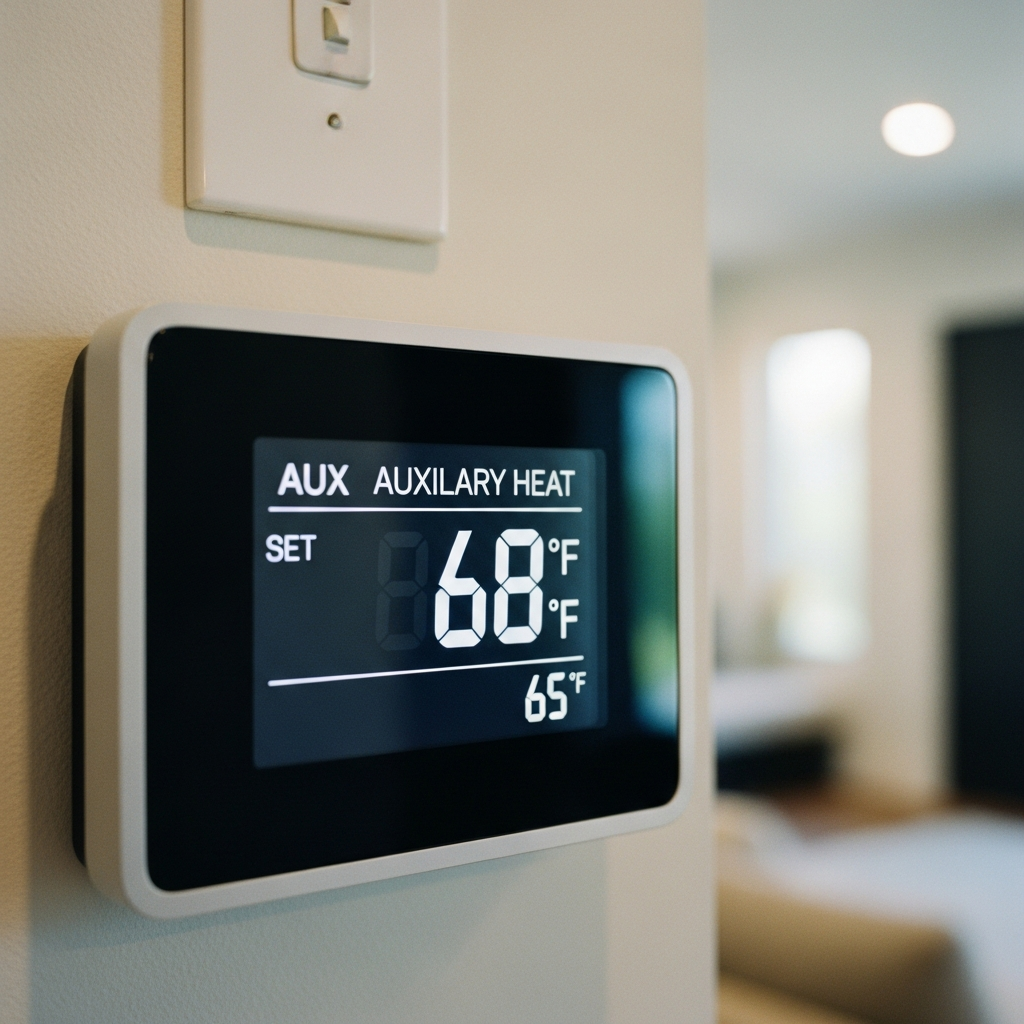
Most heat pump systems in Northwest Florida include auxiliary electric heat strips—sometimes called emergency heat or backup heat. These are electric resistance heaters that automatically activate when your heat pump cannot keep up with heating demand.
You’ll know when auxiliary heat is running because:
- Your outdoor unit may run less or stop completely
- Air from vents may feel warmer than typical heat pump air
- Your energy bill will be noticeably higher
- You may see “AUX HEAT” displayed on your thermostat
Electric resistance heat is expensive to run—typically 2-3 times more costly than your pump’s normal operation. During January cold snaps in the Panhandle, when auxiliary heat runs for extended periods, it’s common for homeowners to see their electric bills double.
Should My Heat Pump Run Constantly in Cold Weather?
Yes, it is normal for heat pumps to run constantly or nearly constantly when outdoor temperatures drop below 40°F. Unlike furnaces that cycle on and off, heat pumps in cold weather operate continuously at lower capacity to maintain indoor temperature. Constant operation is actually more efficient than short cycling and helps maintain consistent comfort. However, if your heat pump runs constantly and produces no warm air, or if ice buildup on the outdoor unit doesn’t clear, you should call for heating service.
Understanding the Defrost Cycle: Why Your Heat Pump Reverses
On cold mornings between 32-45°F with high humidity (common along the Gulf Coast), you might notice your heat pump blowing cold air for a few minutes or see steam rising from your outdoor unit. This is completely normal—it’s the defrost cycle.
When frost builds up on your outdoor coil, it acts like insulation and reduces efficiency. To remove this frost, your heat pump periodically reverses operation for 5-10 minutes, briefly acting like an air conditioner to melt ice off the outdoor coil. During defrost cycles, auxiliary heat automatically activates to prevent cold air from blowing into your home.
Is Your Heat Pump Broken or Just Cold? How to Tell the Difference
Normal cold-weather behavior:
- System runs longer cycles than in milder weather
- Auxiliary heat activates when temperatures drop below 40°F
- Periodic defrost cycles with temporary temperature changes
- Increased energy consumption during cold snaps
- Outdoor unit may have light frost that clears during defrost
Signs of actual problems requiring service:
- System blowing cold air continuously (not just during brief defrost)
- Constant cycling on and off every few minutes
- Unusual noises like grinding, squealing, or loud banging
- Heavy ice buildup that doesn’t clear after defrost cycles
- Complete system failure or no response to thermostat
Practical Solutions for Cold-Weather Heat Pump Challenges
Adjust Thermostat Expectations
During cold snaps, your heat pump may struggle to maintain your usual 72°F setting. Consider temporarily lowering your target temperature by 2-3 degrees. The system will run less auxiliary heat, saving energy costs, and you can supplement with layers or space heaters in occupied rooms.
Don’t Constantly Adjust Your Thermostat
Repeatedly raising and lowering your thermostat forces your system to activate expensive auxiliary heat more frequently. Set a reasonable temperature and leave it—constant operation is more efficient than repeated startups.
Ensure Proper Airflow
Change your air filter monthly during winter. A clogged filter restricts airflow, forcing your heat pump to work harder and potentially activating auxiliary heat unnecessarily.
Clear the Outdoor Unit
Keep your outdoor unit clear of leaves, debris, and snow. Airflow restrictions reduce efficiency and can cause the system to struggle even in moderate cold.
Schedule Pre-Winter Maintenance
Annual maintenance before winter ensures your heat pump operates at peak efficiency. A professional tune-up includes checking refrigerant levels, testing the defrost cycle, inspecting electrical connections, and cleaning coils—all critical for cold-weather performance.
Understanding Heat Pump Limitations Saves Money and Frustration
Heat pumps remain one of the most cost-effective heating and cooling solutions for Northwest Florida homes, even with their cold-weather limitations. The key is understanding that performance drops below 40°F aren’t system failures—they’re predictable physics that every heat pump experiences.
Many homeowners panic when they notice their system running constantly during cold snaps or see unexpectedly high January electric bills. Armed with the information in this guide, you now know these are normal responses to challenging conditions. The question isn’t whether your heat pump will struggle in the cold—it’s whether that struggle indicates normal operation or actual equipment problems requiring service.
Making Informed Decisions About Your Heating System
For Crestview and Fort Walton Beach area homes, heat pumps make excellent financial sense for the overwhelming majority of the year. Our winters are short and mild enough that a few weeks of reduced efficiency and higher auxiliary heat costs are offset by eight months of highly efficient cooling and shoulder-season heating.
However, if you consistently find yourself uncomfortable during winter or if your January and February electric bills are becoming unmanageable, it may be worth discussing alternatives with a qualified HVAC professional. Options like dual-fuel systems (heat pump with gas furnace backup) or upgrading to a cold-climate heat pump model can provide better cold-weather performance while maintaining summer efficiency.
The investment in understanding your heat pump’s behavior pays dividends in comfort, lower energy costs, and avoiding unnecessary repairs. Regular maintenance, realistic temperature expectations, and knowing when to call for professional help create the foundation for years of reliable heating and cooling in Northwest Florida’s unique climate.
If you have questions about your specific system’s performance or want to schedule a comprehensive evaluation, Just Right Heating & Air Conditioning is here to help. We’ve been serving Panhandle families since 2003, and we understand exactly how local weather patterns affect your HVAC equipment.
When to Call Just Right Heating & Air Conditioning
If your pump exhibits any of the warning signs listed above, or if you’re experiencing unusually high energy bills without corresponding cold weather, it’s time to schedule service. Our technicians understand the unique challenges that Northwest Florida’s variable winter weather presents for heat pump systems.
Common issues we address include:
- Defrost cycle malfunctions causing excessive ice buildup
- Low refrigerant reducing heating capacity
- Faulty auxiliary heat preventing backup heating
- Thermostat problems triggering incorrect heating modes
- Dirty coils reducing efficiency
The Bottom Line on Heat Pumps and Cold Weather
Heat pumps are excellent heating solutions for Crestview, Niceville, Fort Walton Beach, and Valparaiso most of the winter. When temperatures drop below 40°F for extended periods, some performance reduction is normal and expected—not a sign of equipment failure. Understanding how your system responds to cold weather, knowing when auxiliary heat activation is appropriate, and maintaining your equipment properly will help you stay comfortable all winter long.
If you’re concerned about your heat pump’s performance or want to schedule maintenance before the next cold snap, contact Just Right Heating & Air Conditioning at 850-362-9256. Our family-owned company has been keeping Northwest Florida families comfortable since 2003, and we understand exactly how local weather patterns affect your HVAC system.
Learn more: The U.S. Department of Energy provides comprehensive information about heat pump technology and cold-climate performance for homeowners considering upgrades or troubleshooting existing systems.

Joshua Kuenzel is the owner and lead technician of Just Right Heating and Air Conditioning in Crestview, FL. A licensed Florida HVAC contractor (CAC1820142) and EPA certified technician with experience since 2006, Joshua founded the company in 2003 to provide honest, affordable HVAC service to Northwest Florida families.