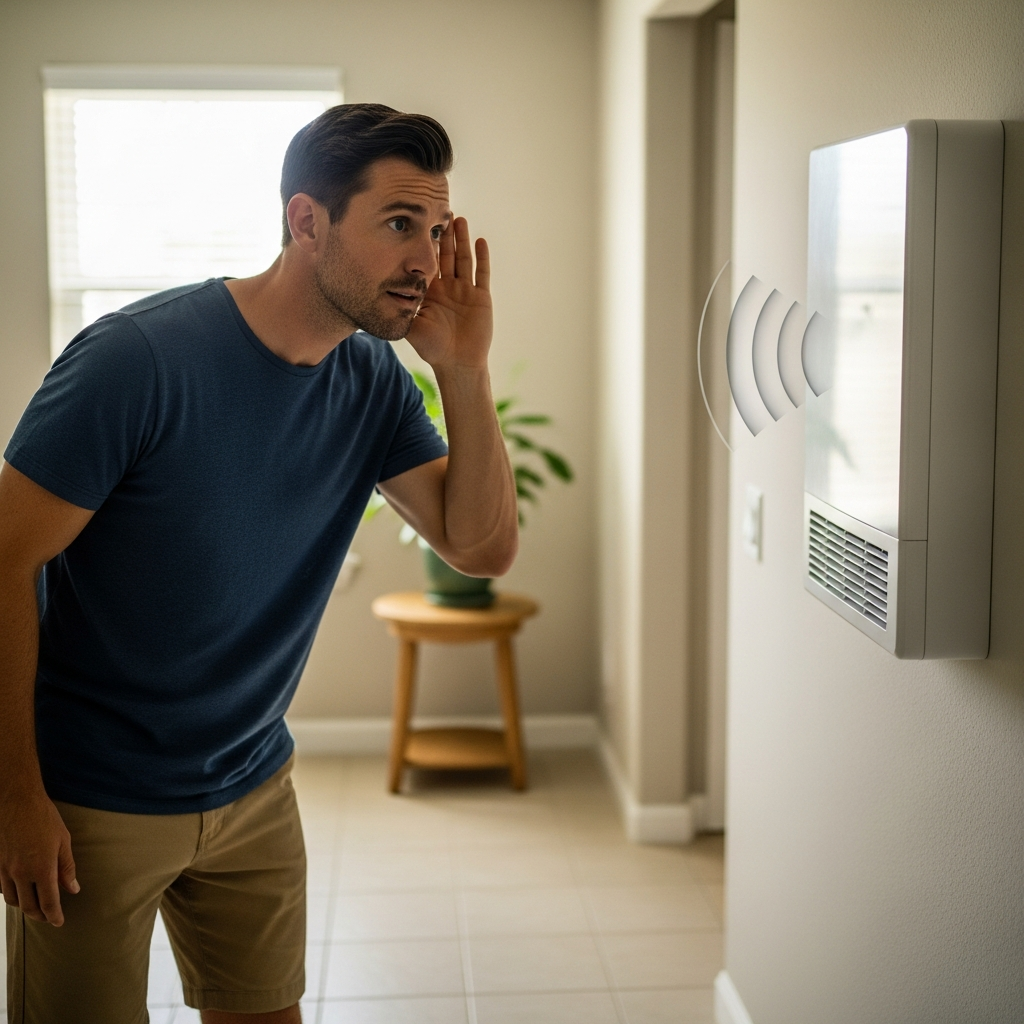
Your heating system shouldn’t sound like it’s auditioning for a horror movie soundtrack. While some operational sounds are completely normal, certain noises signal that your furnace or heat pump needs professional attention—and ignoring them can turn a simple repair into an expensive emergency.
If you live in Crestview, Niceville, Fort Walton Beach, or Valparaiso and you’ve been startled by banging, rattling, whistling, or grinding coming from your heating system this winter, this guide will help you understand what’s normal, what’s concerning, and when to call Just Right Heating & Air Conditioning.
Why Does My Heating System Make Noise?
All heating systems make some noise during normal operation. The sound of air moving through ducts, the click of a thermostat, the gentle hum of a blower motor, or the whoosh of a burner igniting are all normal sounds. However, loud, unusual, or new noises often indicate mechanical problems, loose components, or airflow restrictions that need attention. The key is distinguishing between operational sounds and warning signs.
1. Banging or Booming Noises: Delayed Ignition and Expanding Ducts
What It Sounds Like: A loud bang or boom when your heating system starts up, or periodic banging sounds while the system runs.
What It Means:
For gas furnaces and heat pumps with gas backup, a banging noise at startup often indicates delayed ignition. This happens when gas builds up in the combustion chamber before igniting, causing a small explosion when the burners finally light. This is one of the most serious heating system noises and requires immediate professional attention.
Delayed ignition can be caused by:
- Dirty or clogged burners preventing immediate ignition
- Weak pilot light flame or faulty electronic ignition
- Low gas pressure requiring more buildup before combustion
- Improperly adjusted gas valve
If ignored, delayed ignition can crack your heat exchanger—a critical component that separates combustion gases from your home’s air. A cracked heat exchanger often means you need a new furnace because replacement costs typically exceed the value of older units.
Ductwork Banging: A different type of banging occurs when metal ducts expand and contract as they heat and cool. This is caused by:
- Thin sheet metal ducts flexing with temperature changes
- Undersized or improperly secured ductwork
- High air pressure in the duct system
Ductwork banging is usually not dangerous but can be annoying. The sound typically occurs shortly after your system starts or stops. While not an emergency, persistent loud ductwork noises can indicate airflow problems that reduce efficiency.
What to Do: For startup banging with gas systems, turn off your heating system and call a professional immediately. For ductwork banging, schedule service to have ducts inspected and potentially reinforced or resized.
2. Rattling or Vibrating: Loose Components
What It Sounds Like: A rattling, buzzing, or vibrating sound that may worsen when the system runs at higher speeds.
What It Means:
Rattling noises typically indicate something has come loose inside your heating system. Common culprits include:
Loose Panels or Housing: The most benign cause—simply panels that have vibrated loose over time. You can often identify this by gently pressing on different panels while the system runs. If the noise stops when you press a specific panel, tightening the screws usually solves the problem.
Loose Blower Motor Components: More concerning rattling can come from:
- Loose blower wheel (the fan that moves air)
- Worn motor mounts allowing the motor to vibrate
- Debris caught in the blower assembly
- Failing motor bearings
Ductwork Rattling: Similar to banging but lighter—often caused by:
- Ducts that are smaller than vent openings, causing movement
- Loose duct joints allowing vibration
- Debris inside ductwork (leaves, construction materials, etc.)
In Northwest Florida’s humid climate, rattling can also indicate rust or corrosion weakening connections between components.
What to Do: If you can safely access your heating system’s panels and tighten them yourself, that’s fine for exterior panels. However, don’t open the blower compartment or attempt to repair internal components yourself. Rattling from inside the unit should be diagnosed by a professional who can identify whether parts need lubrication, tightening, or replacement.
3. Squealing or Screeching: Belt and Motor Problems
What It Sounds Like: A high-pitched squeal or screech, similar to a car with a worn belt, that may be constant or occur when the system starts.
What It Means:
Squealing noises almost always indicate a problem with moving parts, specifically:
Worn or Loose Blower Belt: Older furnaces use a belt to connect the motor to the blower wheel. When this belt wears out, slips, or becomes misaligned, it produces a squealing sound. The belt may need:
- Tightening if it has more than half an inch of slack
- Replacement if it shows signs of fraying, cracking, or glazing
- Realignment if it’s running at an angle
Motor Bearing Problems: If your system doesn’t have a belt (many modern systems use direct-drive motors), squealing usually means the motor bearings are failing due to:
- Lack of lubrication
- Normal wear over time
- Dirt and debris in the motor
Blower Wheel Rubbing: Sometimes the blower wheel itself becomes misaligned and rubs against the housing, creating a scraping or squealing noise.
What to Do: Turn off your heating system and call for service. Continuing to run a system with belt or bearing problems can cause the motor to fail completely, resulting in a much more expensive repair. Belt replacement is relatively inexpensive; motor replacement is not.
4. Whistling or Hissing: Airflow Restrictions and Leaks
What It Sounds Like: A high-pitched whistle or steady hissing sound while your heating system runs.
What It Means:
Whistling indicates air is being forced through a restriction, similar to blowing through pursed lips.
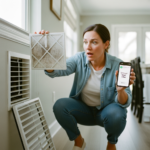
Clogged Air Filter: The most common cause of whistling in Northwest Florida homes. Our humid climate means air filters collect dust, pollen, mold spores, and pet dander quickly. When a filter becomes clogged, air struggles to pass through, creating a whistling sound as the blower motor forces air through the restriction.
This is more than just annoying—a clogged filter:
- Reduces heating efficiency by 5-15%
- Forces the blower motor to work harder, shortening its lifespan
- Can cause the heat exchanger to overheat and crack
- Reduces indoor air quality
Ductwork Leaks: Whistling can also come from:
- Small holes or gaps in ductwork where air escapes
- Improperly sealed duct joints
- Crushed or damaged flexible ductwork in crawl spaces or attics
Refrigerant Leaks (Heat Pumps): For heat pump systems, hissing can indicate refrigerant escaping through a leak. This is serious because:
- Lost refrigerant reduces heating capacity
- The compressor can be damaged running without proper refrigerant
- Leaking refrigerant is an environmental concern
Gas Leaks (Furnaces): While rare, hissing near a gas furnace could indicate a gas leak—an immediate safety hazard. If you smell gas (rotten egg odor) along with hissing, evacuate your home and call your gas company immediately.
What to Do: First, check your air filter. If it’s dirty or hasn’t been changed in over a month, replace it and see if the whistling stops. If the filter is clean or replacing it doesn’t help, call for professional service to inspect ductwork and check for refrigerant or gas leaks.
5. Clicking or Ticking: Ignition and Electrical Issues
What It Sounds Like: Repeated clicking sounds, especially when your heating system tries to start, or occasional ticking while the system runs.
What It Means:
Some clicking is normal—a single click when your thermostat signals your system to start, and another when it stops, is expected. However, repeated or continuous clicking indicates problems.
Ignition System Problems: For gas furnaces and heat pumps with gas backup, continuous clicking without the system starting means:
- The igniter is trying but failing to light the gas
- The flame sensor is dirty and not detecting ignition
- The gas valve is stuck or malfunctioning
- There’s an electrical problem with the ignition control board
Electrical Component Issues: Clicking can also indicate:
- A failing capacitor (the component that gives motors the jolt needed to start)
- Relay problems in the control board
- Loose electrical connections arcing
- Thermostat wiring issues
Heat Exchanger Cracks: In older furnaces, ticking sounds as the system heats and cools can indicate a cracked heat exchanger expanding and contracting—a serious safety issue that requires immediate attention.
What to Do: If your heating system clicks a few times but eventually starts and runs normally, schedule service soon—the problem will likely worsen. If it clicks continuously without starting, or if clicking is accompanied by the smell of gas, turn off your system and call for emergency service.
Normal Heating System Sounds You Don’t Need to Worry About
Not every noise requires a service call. These sounds are normal:
- Gentle humming: The sound of the blower motor and air movement
- Single click at startup and shutdown: Thermostat and relay operation
- Soft whooshing: Air moving through registers and ducts
- Occasional light popping: Normal duct expansion and contraction (not loud banging)
- Brief rushing sound: Gas flowing to burners at startup
- Low rumble when burners light: Normal combustion sound for gas systems
When Should You Call a Professional for Heating System Noises?
Contact Just Right Heating & Air Conditioning if you notice:
- Any new or unusual noise that wasn’t present before
- Noises that are getting progressively louder
- Sounds accompanied by reduced heating performance
- Any smell of gas along with unusual sounds
- Grinding, screeching, or loud banging noises
- Continuous clicking without the system starting
How Regular Maintenance Prevents Noisy Heating Problems
Many noise-related heating problems can be prevented with annual maintenance. During a professional tune-up, technicians:
- Lubricate moving parts to prevent squealing
- Tighten electrical connections to eliminate clicking
- Clean burners to prevent delayed ignition and banging
- Check and adjust blower belts before they fail
- Inspect heat exchangers for cracks
- Clear debris from blower assemblies
- Test ignition systems and safety controls
Scheduling maintenance in the fall, before you need your heat regularly, ensures these potential problems are caught and corrected before they cause noisy emergencies.
Protect Your Comfort This Winter
Your heating system is trying to communicate with you through these sounds. While some noises are normal operational sounds, others are warning signs that shouldn’t be ignored. The good news is that most noise-related problems are relatively inexpensive to fix when caught early—but can become major repairs if ignored.
If you’re hearing any concerning sounds from your heating system in Crestview, Niceville, Fort Walton Beach, or Valparaiso, contact Just Right Heating & Air Conditioning at 850-362-9256. Our experienced technicians can diagnose the source of the noise and provide honest recommendations for repair.
We offer comprehensive HVAC maintenance plans with our $79 tune-up special to keep your system running quietly and efficiently all winter long.
Learn more: The American Society of Heating, Refrigerating and Air-Conditioning Engineers (ASHRAE) provides technical standards and guidance on proper HVAC system operation and maintenance for homeowners and professionals.

Joshua Kuenzel is the owner and lead technician of Just Right Heating and Air Conditioning in Crestview, FL. A licensed Florida HVAC contractor (CAC1820142) and EPA certified technician with experience since 2006, Joshua founded the company in 2003 to provide honest, affordable HVAC service to Northwest Florida families.